English
 Türkçe

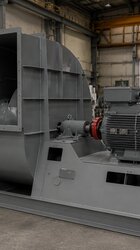
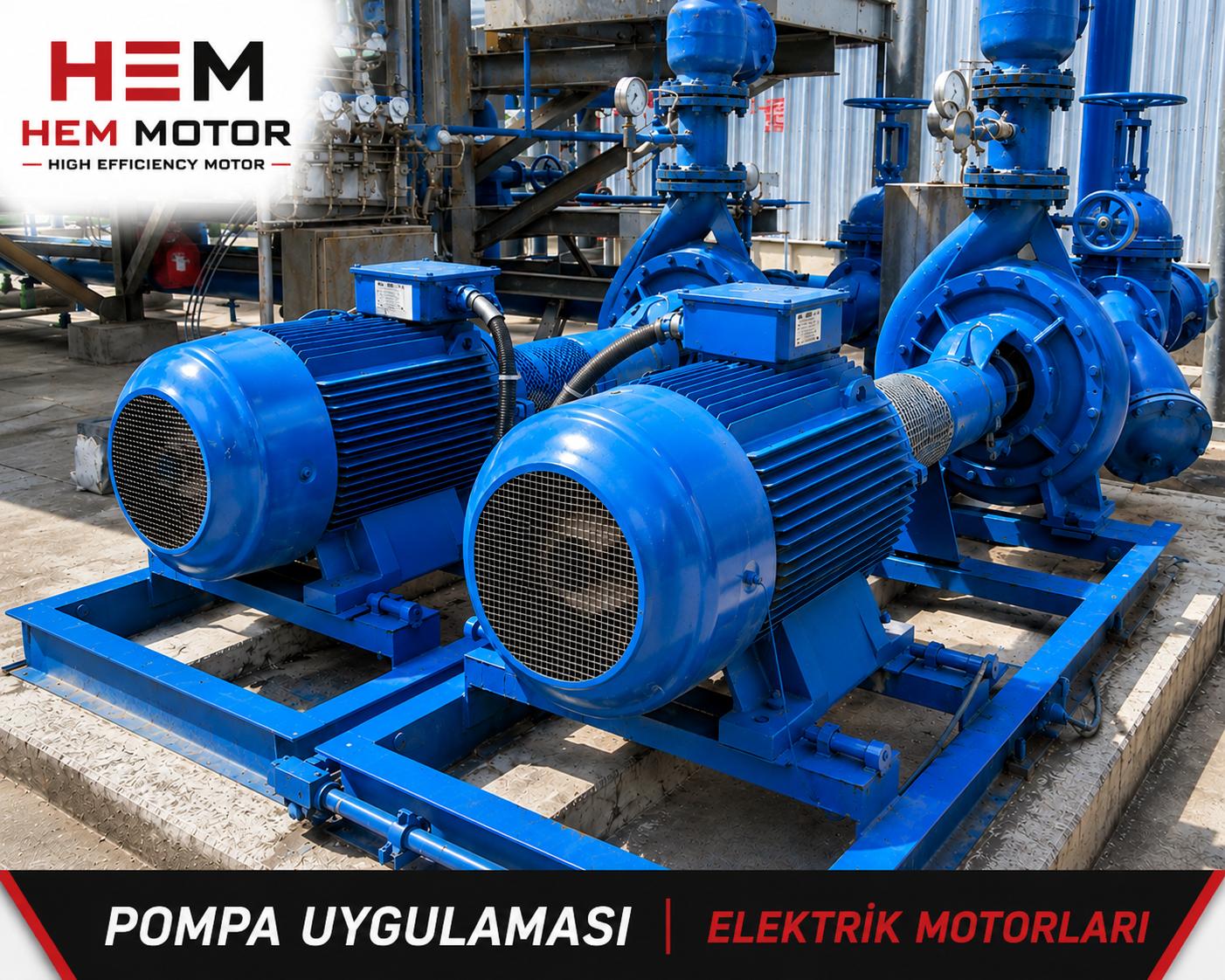

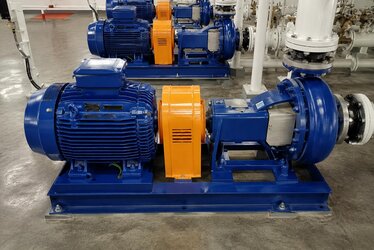
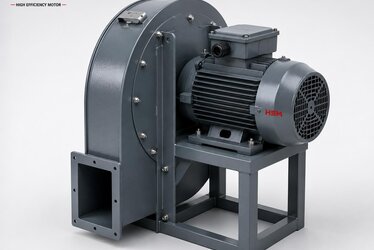
Water and wastewater treatment plants are facilities that run around the clock without stopping; at the heart of these plants sit the blower (aeration), mixer and transfer pump motors. The stoppage of an aeration tank means the aerobic bacteria in biological treatment are left without oxygen; the failure of a transfer pump blocks the plant's flow. For this reason, when choosing a motor, water and wastewater plant investors look not only at power but also at continuity, resistance to damp/corrosive environments and energy efficiency. As HEM Motor, we supply IP55-protected cast iron body motors designed for continuous duty (S1) in the IE3 and IE4 efficiency classes from stock. In this article we explain how to choose the right motor for each application in your plant, which protection and efficiency criteria to look at, and what to ask of us at the quotation stage.
Where Is the Motor Load in a Water and Wastewater Plant?
In a wastewater treatment plant, the large part of electricity consumption is spent in the aeration systems that add oxygen to the water. In aerobic biological treatment, oxygen must be continuously supplied to the tank so the bacteria can break down the organic pollution; the blower motors that provide this oxygen are the largest energy-consuming item in most plants. Mixers keep the sludge and water homogeneous, while transfer pumps carry the water between stages. Each of these three motor groups has a different duty profile, and when not chosen correctly, the result is either energy waste or early failure.
The basic rule in motor selection is this: because the plant runs 24/7, the motor must also be designed for continuous duty (S1 duty). Running a motor labelled for intermittent duty under continuous load raises the winding temperature and shortens its life. Our article on motor fleet management in three-shift facilities also complements this subject on how to manage the motor fleet in continuously running plants.
Another important matter for the technical leads and purchasing units choosing motors in a water and wastewater plant is the continuity of supply and service of the motor. When a blower or transfer pump motor fails, being able to quickly find an exactly matching replacement keeps the plant from stopping. For this reason, a motor should be assessed not only by its price today, but also in terms of spare part availability, equivalent availability and service support. As HEM Motor, we secure this continuity by offering fast supply in the common powers and speeds in our stock. For all of your plant's pump, fan and blower needs, you can use our pump, fan and blower motors content as a single reference source.
Blower Motors: The Motor of Aeration
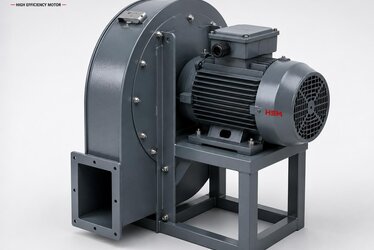
Blower motors send pressurised air into the aeration tank, providing oxygen to the aerobic bacteria. In this application the motor runs almost without stopping; for this reason the efficiency class feeds directly into the electricity bill. An IE4 Super Premium motor produces fewer losses per running hour than an IE3, and on a blower that runs thousands of hours a year this difference means serious savings. In blower applications, motors of 1500 or 3000 rpm are mostly preferred; the right speed is determined by the blower type used (lobe blower, turbo blower, etc.).
For blower applications, HEM Motor offers motors in the 0.55 kW – 355 kW range, with 100% copper windings, IP55 protection and Class F insulation. If you want to see the effect of the efficiency class choice on the payback period, you can review the payback calculation of replacing an old motor with IE4.
Mixer Motors: Homogeneous Sludge and Water
Mixers prevent the sludge from settling at the bottom of the treatment tanks, ensure chemicals are distributed homogeneously into the water, and help the biological process proceed healthily. Mixer applications generally require low speed and high torque; for this reason the motor is often used not directly but together with a gearbox. Motors of 1000 or 1500 rpm are reduced to the desired low output speed through the gearbox.
Whether a mixer motor should be purchased separately or as a geared monoblock is a frequently asked question; our comparison of geared motor vs separate motor + reducer makes this decision easier. For mixers requiring low output speed, we also offer gearbox options compatible with our high-efficiency electric motors.
Transfer and Process Pump Motors
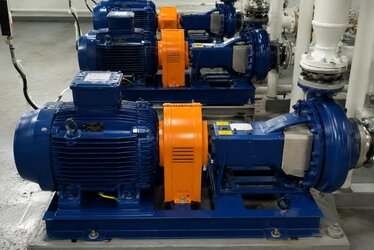
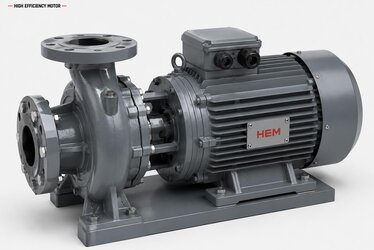
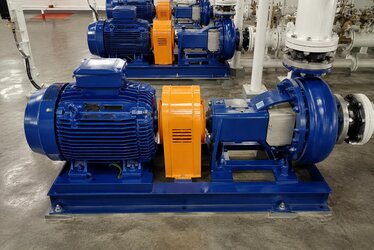
Transfer pumps carry water from one stage to another or to the plant's discharge point. In pump motors, the correct power and speed selection is made according to the pump's flow-head curve; an oversized motor means energy waste, an undersized motor means insufficient flow. HEM Motor's pump electric motors product group offers motors suitable for vertical and horizontal pump systems, with flanged (B5/B14) and foot-mounted (B3) options.
If you want to see in more detail how pump motor selection is made with flow and head calculation, our articles on centrifugal pump motor selection: flow and head and our deep well pump motor selection guide expand this subject with a pump-fan focus; in this article we focus on the wastewater plant as a whole.
Damp and Corrosive Environment: IP Protection and Material Selection
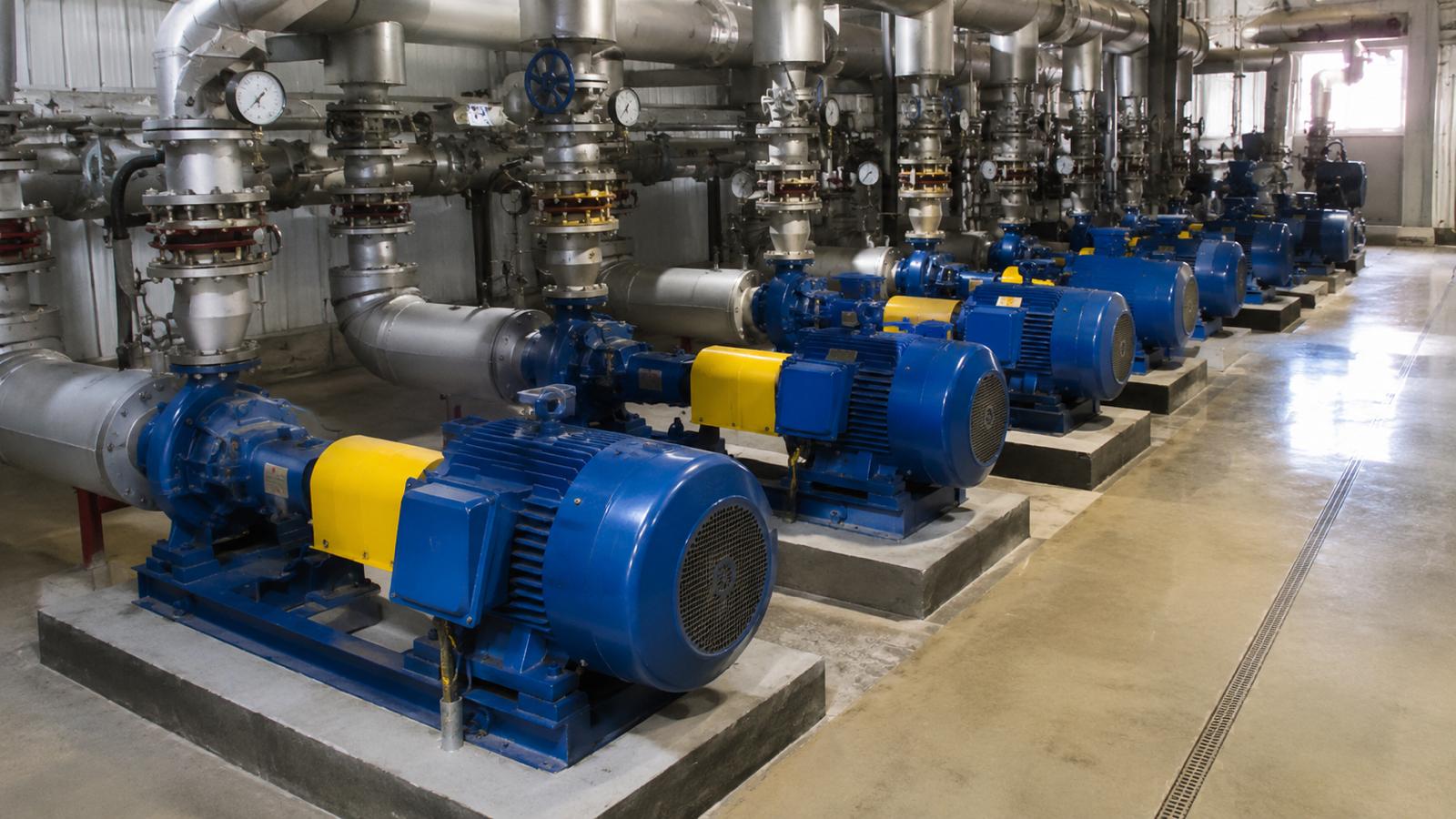
Water and wastewater plants are, by their nature, damp environments, at times corrosive and containing chemical vapour. For this reason the motor's protection class (IP) is of critical importance. HEM motors are standard IP55 protected; this means protected against dust and resistant to water jets coming from any direction, and is suitable for the typical dry/damp mounting points within the plant. At points with more aggressive water and moisture exposure, a higher protection class (IP65) can be assessed on request; sharing the conditions of the mounting point with us at the quotation stage lets us bring the right recommendation.
A cast iron body provides an advantage both in mechanical strength and in long life in the open field. We covered the behaviour of cast iron against corrosion and open-field conditions in our article on corrosion protection and open-field use in cast iron motors; and for frame selection according to environmental conditions you can look at our comparison of cast iron versus aluminium frame. For all your plant's drive needs, cast iron body motor options are available in our stock.
Speed Selection: When 1000, 1500 and 3000 rpm?
In a water and wastewater plant, the motor's speed is chosen according to the character of the load it drives, and this choice affects both performance and energy consumption. 3000 rpm (2-pole) motors are preferred in high-speed blower and compact pump applications; they stand out when high pressure and flow are required. 1500 rpm (4-pole) motors are the most widely used speed and offer balanced performance in general pump, blower and mixer applications. 1000 rpm (6-pole) motors are used in large-diameter mixer and special pump applications that require lower speed, higher torque and quieter operation.
The wrong speed selection either pushes the pump's operating point off the curve or leads to unnecessary energy consumption. For this reason the speed selection should be determined according to the recommendation of the manufacturer of the driven equipment (pump, blower, mixer). If you are replacing an existing motor, preserving the speed information on the old motor's nameplate is the safest path. If you wonder what causes the small difference between the speed written on the nameplate and the actual speed (slip) in asynchronous motors, the relationship between pole count and speed forms the basis of drive design.
Energy with an Efficient Motor: Lowering the Plant's Operating Cost
The biggest expense of wastewater plants is electricity, and a significant part of this electricity is spent in the motors. Because blower motors in particular run almost without stopping, every percentage point of efficiency gained in these motors turns into a concrete saving over the year. Preferring IE4 over IE3 in continuously running blower and pump motors can pay for itself in a short time because the annual running hours are high. The electricity you pay over a motor's lifetime is many times the purchase price; this is why, when buying, you should look not only at price but at the total cost of ownership. Our articles on the IE3 vs IE4 investment decision and the IE4 threshold for pumps, fans and compressors help you quantify this decision.
If you want to draw up your plant's current motor inventory and see which ones it makes sense to replace with an efficient motor, our article on preparing for an energy efficiency audit and motor inventory is a good starting point. You can reach our entire high-efficiency product range from the high-efficiency electric motors category, and for pump and fan-focused content you can follow our pump, fan and blower motors blog category.
Another benefit of switching to an efficient motor is its positive effect on power factor and reactive consumption. High-efficiency motors generally run with a better power factor; this reduces the business's reactive penalty risk and eases the grid load. In plants such as wastewater facilities that run continuously and at high power, this effect feeds directly into the electricity bill. Moreover, a motor that heats up less lowers the cooling need and the probability of failure, providing an indirect maintenance saving as well. When all these items come together, the motor's total cost of ownership becomes far more decisive than the purchase price; this is why, when evaluating a quote, we recommend looking not only at the list price but at the lifetime cost.
6 Criteria to Watch When Choosing the Right Motor
When buying a motor for a water and wastewater plant, looking only at power is not enough. The following six criteria determine both the initial investment and the long-term operating cost, and are the information you should share with us at the quotation stage.
1. Duty type: Because the plant runs 24/7, the motor must be labelled for continuous duty (S1). A motor labelled for intermittent duty overheats under continuous load. 2. Power and speed: Determined by blower type for the blower, flow-head curve for the pump, required torque for the mixer; an oversized motor means energy waste, an undersized one means insufficient performance. 3. Protection class (IP): IP55 at dry/damp points, IP65 on request at more aggressive water exposure. 4. Efficiency class: On continuously running motors, IE4 pays back quickly due to high running hours. 5. Mounting type: A connection suited to the pump flange (B5/B14), the mixer gearbox or the blower base (B3). 6. Frame material: Cast iron provides durability in damp and corrosive environments.
Matching these criteria with the nameplate information prevents the wrong motor arriving. Our article on exact matching with nameplate information before ordering explains step by step which information you should gather before quoting. To see the difference between mounting types you can look at our article on choosing the B5 or B14 connection type.
When Replacing an Existing Pump or Blower Motor
The most frequently encountered need in water and wastewater plants is replacing a failed pump or blower motor with a new one. In this case, what is critical is finding a motor that is an exact match for the old one (same power, speed, frame size, shaft diameter, mounting type and flange dimension). If the nameplate information is legible, the process is faster; if the nameplate is worn off, an equivalent motor can be determined from the frame size and mechanical dimensions. We explained the way to select the right motor for an existing pump from its nameplate in our article on booster motor replacement: selection from the nameplate; the same logic applies to transfer and process pumps.
If you want to replace an old brand's motor exactly, our replacing an old brand motor exactly guide, showing how an equivalent motor is selected, makes your job easier. As for the question of whether it makes more sense to rewind a faulty motor or buy a new one, our article on rewinding a motor or buying a new one offers a clear view; on small-frame motors, replacing with a new one is usually advantageous in both efficiency and cost.
Frequently Asked Questions
What IP protection should a wastewater plant blower motor have?
Blower motors are generally located within the machine room, at a point not directly exposed to water jets; in this case the standard IP55 protection is suitable. However, if the motor is in the open field or at a point with intense moisture/water splash, a higher protection class (IP65) should be assessed on request. Sharing a photo and the conditions of the mounting point makes it easier for us to bring the right recommendation.
Should I use the mixer motor directly or with a gearbox?
Because mixers require low speed and high torque, in most applications the motor is used together with a worm gear or a bevel-helical gearbox. The desired output speed is set by the gearbox ratio. We can offer either a separate motor + gearbox or a combined quote depending on the need; for the decision we recommend reviewing our geared motor comparison article.
How long does a motor last in a continuously running plant?
A motor correctly chosen for continuous (S1) duty, with IP protection suited to its environment and with periodic maintenance carried out, runs trouble-free for many years. The factors that most affect lifetime are overheating, insufficient IP protection and lack of maintenance. Keeping a spare motor at critical points prevents the plant from stopping in the event of a possible failure.
Which efficiency class do you recommend for pump and blower motors?
For blower and transfer pump motors with high annual running hours, we recommend an IE4 motor (super premium class); because this industrial electric motor group runs continuously, the efficiency difference compensates for the difference in purchase cost in a short time. On auxiliary motors that run less, IE3 can also be a suitable option. We assess and recommend the most suitable class for each application together with the running hours and power information.
Get a Quote
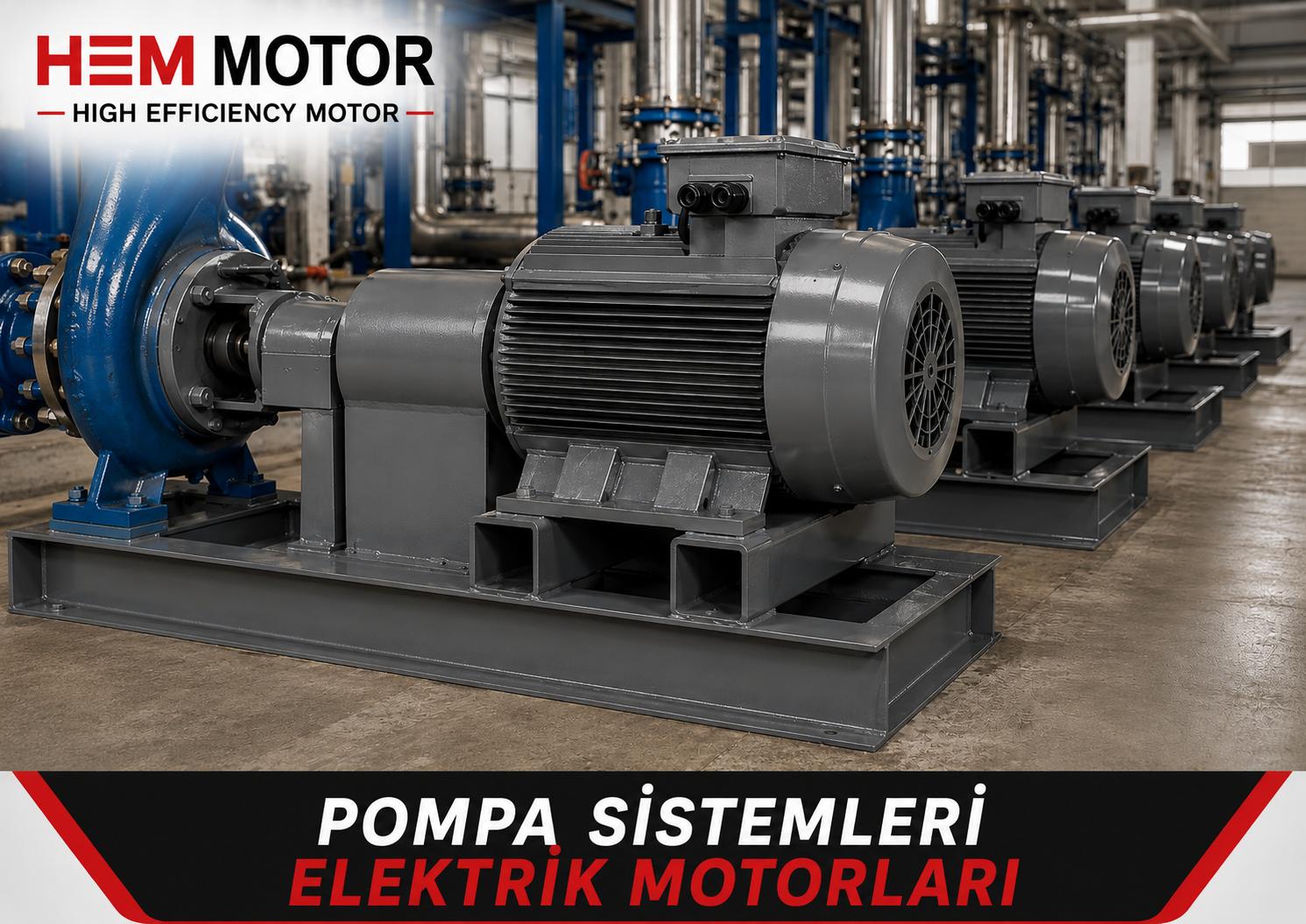
Are you looking for a blower, mixer or transfer pump motor for your water and wastewater treatment plant? Share the power, speed, mounting type and the conditions of the mounting point with us; let us quickly quote the motor suited to your plant from our IE3/IE4 stock. Call +90 (532) 345 49 86 right away or reach us through our contact us page. As HEM Motor, we are by your side in all drive solutions, including industrial fan motors and pump motors.