English
 Türkçe



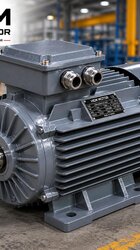


At a plant caught unprepared for audit day, the picture is always the same: nobody knows which electric motor is connected to which line, the nameplates are worn illegible under oil and dust, and the efficiency class is unclear. When you face the auditor with nothing but an electricity bill in hand, you can neither say nor prove which motors have been wasting your money for years. Yet a well-structured motor inventory is completed in just a few weeks and becomes the single most valuable document for spending your renewal budget exactly where it counts.
This guide explains, step by step, how to build a facility motor inventory before the audit, how to determine the on-site efficiency-class distribution, and how to derive a replacement priority that shows which motor should be renewed first. Our aim is not merely to help you pass an audit; it is to turn the inventory into a living decision tool that drives your purchasing decisions for the next five years.
Why Is a Motor Inventory Essential Before the Audit?
A significant share of the electricity consumed in industrial facilities is drawn by electric motors. As pumps, fans, compressors, conveyors and machine tools run all day, most of that load turns through old, low-efficiency motors. The purpose of an energy efficiency audit is to make these losses visible; but an auditor cannot evaluate a motor they cannot see. The inventory is the auditor's starting point.
In a plant without an inventory, the decision-maker answers the question "which motor should I replace for the fastest payback?" by intuition. Intuition usually misleads: the noisiest or oldest-looking motor is not necessarily the one that consumes the most energy or runs the longest hours. Correct prioritization is possible only when operating hours, load factor and efficiency-class data are evaluated together. The single source for all that data is a proper inventory.
Three Concrete Benefits of an Inventory
- Audit readiness: A table delivered to the auditor within hours, listing efficiency class and operating profile motor by motor, shrinks the audit process from days into a single session.
- Budget prioritization: The renewal budget is limited; the inventory shows numerically which replacement yields the shortest payback period.
- Spare-part and stock planning: Seeing which frame size and power combinations repeat across the plant lets you build a smart spare-stock strategy for critical motors.
Step 1: Field Survey and Reading the Motor Nameplate
The foundation of the inventory is physically locating each motor and reading its nameplate. The information critical for the inventory is: rated power (kW), pole count or speed (rpm), voltage and frequency, rated current, IEC frame size (e.g. 132M), protection class (IP) and the efficiency class if present (IE1, IE2, IE3, IE4). On very old motors the efficiency class is not printed at all; in that case it is estimated from the year of manufacture and the power-current relationship.
Unreadable nameplates are a common field problem. For plates worn away by oil, paint or corrosion, there are ways to recover the rated values: the thermal overload setting in the motor's panel, the cable cross-section and the machine builder's documentation are used for cross-checking. In cases of total loss, the shaft height and frame dimensions are measured to narrow the power range from IEC standard tables.
Fields to Record for Every Motor
- Location tag / line number (e.g. "Pump Room P-03")
- Type of load driven (pump, fan, compressor, conveyor, crusher)
- Rated power and synchronous speed
- Efficiency class (from nameplate or estimated)
- Estimated daily/annual operating hours
- Load factor (measured current relative to rated current)
- General mechanical condition (bearing noise, heating, vibration)
A basic classification knowledge of electric motor types makes a correct field survey easier; knowing the typical motor profiles of different applications lets you make reasonable assumptions even on motors with unreadable plates. For a broader view, our electric motor types and buying map content is a good starting point.
Step 2: Extracting the Efficiency-Class Distribution
Once field data is gathered, the second stage is making the plant's efficiency-class distribution visible. Group your motors by IE1, IE2, IE3 and IE4, and calculate the total installed power and estimated annual energy consumption of each group. This table usually reveals a striking truth: most of the plant's energy loss comes from a few low-efficiency large motors that are few in number but run continuously.
The efficiency class determines the extra energy a motor draws from the grid to produce the same shaft power. The efficiency gap between an IE1 and an IE3 motor may look like only a few percentage points, but on a high-power motor running 6,000 hours a year, that gap turns into an energy bill that quickly exceeds the motor's purchase price. Our IE3 electric motor stock guide helps you understand the typical payback periods of moving to IE3 in the most sought-after power-speed combinations.
What to Watch When Interpreting the Distribution
- Consumed energy matters, not installed power: A large motor that runs rarely may use less energy than a small motor that runs constantly. Always use annual operating hours as a multiplier.
- Do not ignore the load factor: Motors running far below rated power drift away from the peak of the efficiency curve; this signals a conscious need for correct power matching.
- Evaluate redundant systems separately: A continuously running main motor and a standby backup motor cannot share the same replacement priority.
Step 3: Deriving the Replacement Priority
The most valuable output of the inventory is a ranked replacement priority list. This list is built on simple logic: for each motor, calculate the annual energy consumption, the savings achieved by upgrading its efficiency class, and how many years that saving takes to pay back the investment. The motors with the shortest payback rise to the top of the list.
Prioritization weighs not only energy savings but also mechanical risk. A motor with bearing noise, excessive heating or frequent faults is pulled forward even if it ranks second on energy; because an unexpected stop of that motor, together with production loss and emergency supply cost, becomes far more expensive. Here, planned renewal is always superior to an unplanned stoppage.

Tying the Renewal Scenario to Stock
A renewal list is meaningful only if the motors on it can be supplied within a reasonable time. So, during prioritization, also mark the stock availability of each target motor's power, speed and frame-size combination. Supply is fast for common IEC frame sizes and standard power-speed combinations; special-flange or special-shaft motors require extra lead time. Our cast iron motor frame size and power matching content helps you pick the right frame size the first time.
Tying your plant's entire motor demand to a single supply plan gives an advantage in both price and lead time. Working with a wide range of asynchronous motor and IE3 stock makes it possible to run your renewal project as a holistic program rather than piece by piece. You can reach all our products and services through our homepage.
Keeping the Inventory Alive: Not a One-Time Job
Most plants extract an inventory only for the audit and never open it again. Yet the inventory's real value emerges when it is kept alive. As every new motor purchase, every rewind and every fault is recorded into the inventory, the table gradually becomes the plant's technical memory. When a motor fails, the answer to "is there a spare, what is the frame size, which supply channel is fastest?" is given in seconds.
A living inventory also reduces your next energy efficiency audit to a formality. By tracking your efficiency-class distribution year on year, you can show with concrete numbers how your investments have improved your energy intensity. This is a strong basis not only for compliance but also for sustainability reporting and incentive applications.
Practices That Make the Inventory Sustainable
- Attach a permanent location tag to each motor; even if the nameplate becomes unreadable, the motor still matches its inventory record.
- Link purchasing, maintenance and fault records to the inventory through a shared table.
- Update load-factor measurements at least once a year; as the production profile changes, so do the priorities.
- Manage the spare motor strategy for critical motors through the inventory.
FAQ
If the nameplate is completely worn off, how do I determine the efficiency class?
First narrow the rated power from the panel's thermal overload setting, the cable cross-section and the machine builder's documentation. Determine the IEC frame size from the shaft height and confirm the power range with standard tables. If the year of manufacture predates IE2, conservatively treating the motor as IE1 and placing it high on the replacement priority list is usually the right call. Motors left in doubt are replacement candidates anyway.
How long does building the inventory take, and how far before the audit should I start?
In a mid-sized plant, the field survey, nameplate reading and data entry are completed in a few weeks. Starting at least four to six weeks before the audit is ideal; this leaves enough time to research the values of motors with unreadable plates and to analyze the efficiency-class distribution. Starting early also lets you gather renewal quotes before the audit.
Should I set the replacement priority by energy savings alone?
No. Energy savings and payback period are the core criteria, but mechanical condition and downtime risk must also be weighed. A critical motor that runs continuously, fails often or has no spare should be pulled forward even if it ranks second on energy; because the production-loss cost of an unplanned stoppage is often greater than the energy saving.