English
 Türkçe



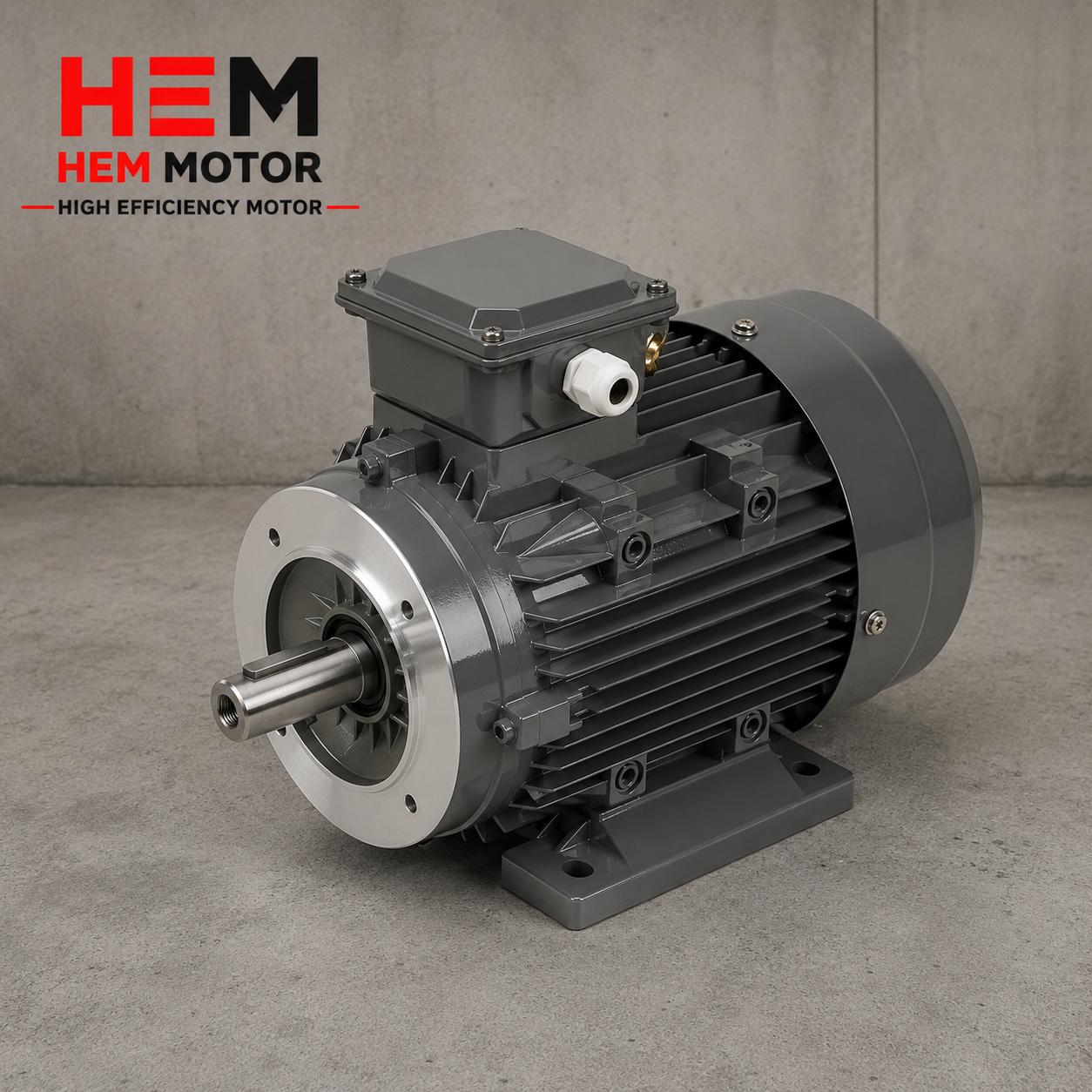

When investing in a high-efficiency electric motor, the most critical question is: How much energy and cost saving does this motor actually deliver per year, and how can I document it? Estimating the saving by looking only at the nameplate efficiency is not enough; the real gain is revealed through measurement and correct calculation. This document is needed both to prove the return on the investment and for energy management systems and incentive applications. As HEM Motor, with our identity as both manufacturer and supplier, we also provide the data that makes the saving measurable and documentable when supplying a high-efficiency motor. This article addresses measuring and documenting the annual energy saving from a purchasing and data perspective.

Why Measure and Document the Saving?
It is a known fact that high-efficiency motors consume less energy than low-efficiency ones; however, you can only know how many kWh per year and therefore how much cost this difference means for your business by measuring. Measurement and documentation are important in three respects: first, they show the payback period of the investment with concrete data; second, they provide the evidence required by standards such as the energy management system (ISO 50001); third, they form the measurement basis that is mandatory when applying for efficiency incentives and support. We covered the amortisation of a high-efficiency motor investment in our IE3 vs IE4 investment article, and the difference between nameplate and field efficiency in our nameplate vs field efficiency article.
Documented saving also makes it easier to justify an investment to management and finance departments. Presenting "measured saving" instead of "estimated saving" also speeds up the approval of the next motor renewal project.
The Basis of Saving: Determining the Reference (Baseline) Consumption
The first step in measuring the saving is to determine the existing situation before replacing the motor, that is, the reference (baseline) consumption. The energy consumption (kWh) of the old motor over a certain operating period must be measured under typical load and recorded. Without this baseline value, the saving of the new motor remains only an estimate. When measuring the baseline consumption, the operating hours, load ratio and operating profile of the motor must also be noted; because the saving depends on these conditions. Creating the motor inventory of the facility forms the basis of this baseline work; we covered the topic in our energy efficiency audit and motor inventory article.
If there is no opportunity to measure the consumption of the old motor, an estimated baseline consumption can be calculated using the motor rated power, efficiency, load ratio and annual operating hours. However, real measurement is always more reliable and offers stronger evidence for documentation.
Which Quantities Should We Measure?
For a reliable saving calculation, not only the total consumption (kWh) but several quantities must be measured together. Active power (kW) shows the real power the motor draws instantaneously; active energy (kWh) is the time-spread total of this power. The power factor (cos φ) shows how much of the drawn power is converted into useful work. Current and voltage measurements help understand the motor load state and supply quality. When these quantities are considered together, the motor real efficiency and saving potential emerge clearly.
The accuracy of the measurement depends on the class of the device used and the measurement duration. Instead of a single short measurement, continuous measurement covering a typical operating period gives a more reliable result; because the load may change over time. Reading the rated values on the motor nameplate correctly is essential to be able to compare with the measured values; we covered nameplate reading in our reading the IE3 motor nameplate article.
Measuring the New Motor Consumption: kWh-Based Comparison
After the high-efficiency motor is commissioned, its consumption (kWh) is measured under the same load and operating conditions. The difference between the two consumptions gives the measured saving. The measurement can be done continuously with a fixed energy analyser or a panel meter, or periodically with a portable power analyser. What matters is that the baseline measurement and the new measurement are taken at the same load and operating profile; otherwise the comparison is misleading. To calculate field efficiency and the real saving correctly, our calculating the real saving correctly article is a guide.

Operating Hours and Load Ratio Determine the Saving
The annual saving of a motor depends not only on the efficiency difference but also on operating hours and load ratio. In a motor running thousands of hours per year at high load, even a small efficiency difference means a large annual saving. In contrast, in a motor running for a short time and at low load, the same efficiency difference provides a small gain. Therefore, the real operating profile of the motor is essential in the saving calculation. We explained the effect of running the motor at the correct load on efficiency in our load ratio and correct sizing article.
Do Not Forget the Power Factor and Reactive Effect
The saving calculation should not be limited to active energy (kWh) only; if the power factor (cos φ) is low, the reactive energy penalty raises the bill. High-efficiency motors usually offer a better power factor, and this provides an additional gain reflected in the bill. Considering the reactive side when documenting the saving fully reflects the real financial gain. We covered the power factor and reactive penalty in our power factor and reactive penalty article.
Calculating the Payback Period with Measured Data
The most concrete output of the investment decision is the payback period: in how many years the extra cost paid for the high-efficiency motor is recovered through the annual saving it provides. This calculation is reliable only with the measured annual kWh saving and the real energy unit cost. While an estimate-based payback period makes the investment look weak, a period calculated with measured data most often clearly justifies the investment. In motors with high operating hours, the payback period is usually shorter than expected. We covered the real consumption calculation and payback period of replacing the old motor with IE4 in our replacing the old motor with IE4 article.
ISO 50001 and the Measurement & Verification (M&V) Approach
The energy management system standard ISO 50001 requires energy performance to be continuously measured and improved. Documenting the saving achieved in motor renewal projects within this system is valuable both for certification and for continuous improvement. Measurement & Verification (M&V), on the other hand, is a framework used to prove the saving independently and consistently: by defining the baseline consumption, measurement period and correction factors, the saving is reported reliably. This approach offers strong evidence especially in multi-motor facilities and incentive applications. We covered facility-wide efficiency class identification in our motor inventory article.
The total cost of ownership (TCO) approach places the measured energy saving at the centre of the purchasing decision; the lifetime cost of a motor is determined more by energy consumption than by its initial price. We detailed the TCO calculation in our total cost of ownership article.
How Does the Efficiency Class Difference Reflect on the Saving?
The size of the saving directly depends on which efficiency class is switched from and to. Switching from an old, low-efficiency motor to an IE3 or IE4 class motor provides a gain equal to the efficiency difference; although this difference looks small in percentage terms, it turns into a large kWh saving in a motor running thousands of hours per year. The IE4 Super Premium class means one step lower loss than IE3; however, which class justifies the investment varies with operating hours and load profile. We covered the decision between IE3 and IE4 in our stay with IE3 or switch to IE4 article.
Therefore, the saving document should not just say "we saved this much"; it should also show which efficiency class switch provided this saving. This creates a concrete reference for future motor renewal decisions. We detailed which efficiency class is required at which power in our IE3 and IE4 efficiency mandate article.
Verifying the Saving with Bill Tracking
Alongside the calculation made with a measuring device, periodic tracking of electricity bills also verifies the saving. Comparing the bill consumption before and after the motor renewal, corrected for variables such as production volume and working days, shows the real gain in the field. Since consumption rises as production increases, the bill comparison must be made with a ratio such as consumption per production unit (specific consumption); otherwise the saving can be hidden. This discipline reveals the real gain of replacing the old motor with a new one; we covered the topic in our replacing the old motor with IE4 and incentives article.
As HEM Motor, when supplying an IE3/IE4 motor, we share the motor rated efficiency, power, speed and load profile data; this data forms the basis your facility needs to calculate baseline and subsequent consumption. Reducing the carbon footprint is also a result of this measured saving; we explained the topic in our reducing the carbon footprint article.
Elements That Should Be in the Saving Report
A documentable saving report is not just a kWh difference; it is a whole that shows under which conditions that difference was obtained. A good report should contain the following elements: the rated values of the replaced and the new motor (power, speed, efficiency class), the baseline consumption measurement and its conditions, the new motor consumption and its conditions, the annual operating hours assumption, the calculated annual kWh saving and any correction factors. This structure makes the report usable both for internal evaluation and for an incentive application.
For the report to be strong, the measurement conditions must be stated transparently; for example, at what load ratio and in which period the measurement was taken should be noted. This transparency makes it easier for third parties (auditor, incentive body) to accept the report. In multi-motor facilities, this discipline merges with fleet management; we covered the topic in our motor fleet management article.
Which Motor Should You Start With?
When there are dozens of motors in a facility, renewing them all at once is often impractical. Saving measurement is also a valuable tool for prioritisation: the motors that run the most, at the highest load and with the lowest efficiency provide the fastest return from renewal. Identifying these motors by measurement is the way to obtain the highest saving with a limited budget. We covered which facility and which motor should switch to IE4 first in our which facility should switch to IE4 first article. We examined the IE4 threshold in pumps, fans and compressors in our IE4 threshold in pumps, fans and compressors article.
What Data Is Needed for a Quote?
To calculate the high-efficiency motor saving correctly and offer a quote, it is enough to share the following information with us: the power and efficiency class of the existing motor (nameplate data if available), estimated annual operating hours, typical load ratio, the driven machine and, if possible, the current consumption measurement. With this data, we show in a measurable way how much annual saving switching to which efficiency class will provide, and we quote a suitable motor. For the correct power and speed selection, you can examine our high efficiency electric motors page, and for product options our IE3 electric motor and IE4 electric motor pages.
In pump and fan applications, adding a frequency drive provides another large layer of saving in addition to the motor efficiency; we covered this combination in our high efficiency motor plus frequency drive article. For more guides, see our electric motors blog category and our homepage.
Frequently Asked Questions
How do I measure the saving of a high-efficiency motor?
First, you measure the consumption (kWh) of the old motor over a certain operating period under typical load and record it as the baseline value. After the new motor is commissioned, you measure the consumption under the same load and conditions, and find the annual saving by relating the difference between the two values to the annual operating hours. You can do the measurement with a fixed energy analyser or a portable power analyser. The motor efficiency and power data you receive from us make this calculation easier.
Can I calculate the saving by looking at the nameplate efficiency?
Nameplate efficiency gives a starting point but does not show the real saving alone; because field efficiency varies with the load ratio, voltage quality and operating conditions. For a correct result, the baseline and subsequent consumption must be measured under real conditions. A calculation that takes into account the difference between nameplate and field efficiency is much more reliable for documentation.
Is a saving document needed for an incentive application?
In efficiency incentives and support, documenting the achieved saving on a measurement basis is usually mandatory. A measurement-verification (M&V) approach that includes baseline consumption, measurement period and correction factors offers strong evidence for the application. By sharing the efficiency and power data of the motors we supply, we make this documentation process easier.
Get a Quote
To see in a measurable way how much annual saving switching to a high-efficiency motor will provide in your facility, talk to the HEM Motor engineering team. When you share the existing motor and operating profile information, we calculate the annual saving potential of the switch and quote a motor in the suitable efficiency class. Call us now at +90 (532) 345 49 86 or send your request through our contact page.