English
 Türkçe

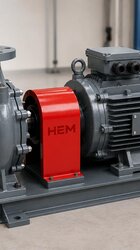
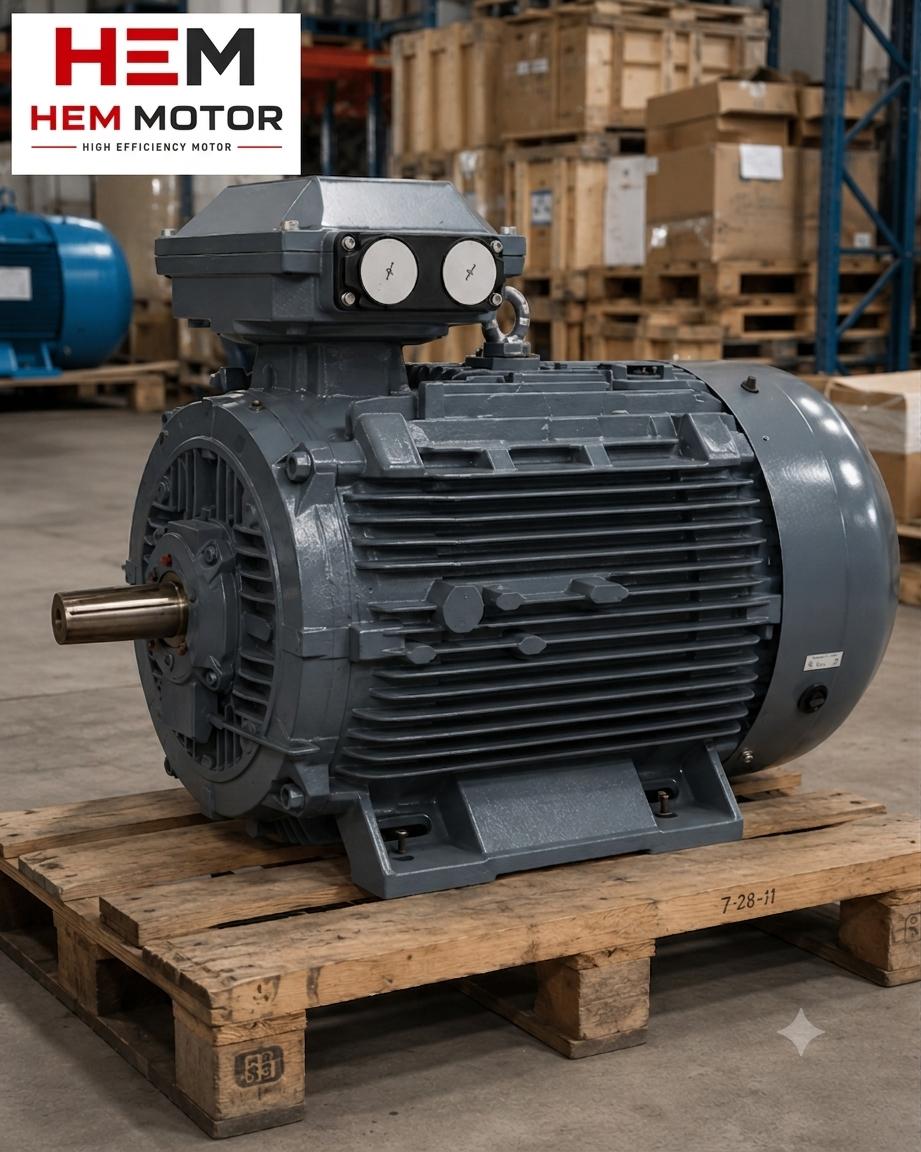

When buying an electric motor, most facilities focus on power, speed and efficiency class; yet how and in which environment the motor is cooled determines its life and uninterrupted operation as much as efficiency does. A motor chosen with the wrong cooling method clogs in a dusty environment, overheats at low speed or cannot deliver its rated power inside a closed cabinet. As HEM Motor, with our identity as both manufacturer and supplier, we advise our customers to select a motor not only by the catalog but by the environment it will work in. This article covers the difference between the most common cooling methods, IC411 (self-cooled, fan), IC416 (forced / external fan) and IC410 (fanless), from a commercial buying angle. By clarifying which cooling method is right for which environment, our aim is to help you supply efficient electric motors that run trouble-free for years.

What Is the IC Cooling Code and Why Does It Matter at Order?
The IC code (International Cooling) defines in a standard way how a motor is cooled. A code such as IC411 on the nameplate or catalog describes the coolant type and circulation method. The vast majority of three-phase induction motors are air-cooled; the difference lies in how air is passed over the motor. Reading this code correctly lets you request the right motor at quotation. For nameplate basics, our article on reading the IE3 motor nameplate is a complementary resource.
Let us briefly introduce the three main cooling methods:
- IC411: The most common method, where a fan at the shaft end cools the body externally over its surface. Since the fan turns with the motor speed it needs no separate supply (TEFC type: totally enclosed, fan cooled).
- IC416: A method where a separately powered external fan, independent of the motor shaft, continuously cools the body. Cooling continues even when the motor runs slowly or stops.
- IC410: Fanless; the body is cooled only by natural convection and surface. Usually used in fan applications where high airflow already exists, or in very short-duty operation.
IC411 (Self-Cooled, Fan / TEFC): The Most Common Solution
IC411 is the most common cooling method in industry, and most standard three-phase motors use this construction. The fan at the rear end turns with the shaft, and thanks to the guiding fan cover it passes air over the body fins to expel heat. Because the body is totally enclosed (TEFC), the interior is protected from the outside environment, which together with IP55 protection ensures reliable operation in dusty and humid environments.
Buying advantages of IC411:
- No extra supply or wiring needed: The fan runs on the motor own speed, with no separate electrical or commissioning cost.
- Low maintenance: With no extra moving parts, the maintenance load is low.
- Economical: Being the most common construction, it offers stock availability and price advantage.
The limit of IC411 is that cooling depends on motor speed. If the motor runs long at low speed the fan also slows, airflow drops and the motor heats up. So IC411 is ideal in constant-speed applications fed directly from the grid; but care is needed in variable-speed, drive-fed applications.
Which Environments and Applications Suit IC411?
Conveyor drives, pumps, compressors, general-purpose industrial drives and most directly grid-fed applications suit IC411. A cast-iron-body, IP55-protected IC411 motor runs safely even in a dusty concrete plant or mill environment. In open-field and corrosion-risk environments the body choice also matters; our article on corrosion protection and open-field use in cast-iron-body motors deepens this topic.

IC416 (Forced / External Fan): The Low-Speed Cooling Solution
IC416 is the method where a separately powered external fan (forced ventilation), independent of the motor shaft, continuously cools the body. The biggest advantage of this construction is that cooling is independent of motor speed. Even if the motor runs at low speed with a variable frequency drive (VFD), the external fan turns at full capacity and keeps the same cooling performance.
Cases where IC416 is critical:
- Drive-fed motors running over a wide speed range: Especially constant-torque applications that carry full load at low speed.
- Continuous long-term operation at low speed: Scenarios where the IC411 fan is insufficient and the motor heats up.
- High cycling frequency and heavy duty: Drives running with frequent start-stop or continuous heavy load.
On drive-fed motors, cooling is an often-skipped but critical part of purchasing. If you will run a motor at low speed with a drive, evaluate before ordering whether IC416 is needed instead of IC411. Our article on a variable frequency drive (VFD) with an induction motor details drive selection and motor compatibility; our article on motor selection in variable-speed applications shows how the constant-torque / variable-torque distinction affects the cooling need.
The Cost of IC416 and When It Pays Off
Because IC416 requires a separate fan, a separate supply and extra wiring, it has a higher initial cost than IC411. But continuous overheating from the wrong method choice shortens winding life and leads to a far more expensive outcome. In an application that carries continuous full load at low speed, the IC416 cost more than pays for itself by preventing early motor failure and downtime cost.
IC410 (Fanless): Special Cases Where Cooling Comes with the Load
IC410 is a construction with no separate cooling fan on the motor. Cooling is provided by natural convection and the body surface, or by the application own airflow. This method is preferred in some fan and blower drives where the motor is already exposed to high airflow, or in very short, intermittent duty types. Using an IC410 motor in a general application is risky, because if sufficient airflow is not guaranteed the motor overheats quickly. So an IC410 choice must always rest on an airflow analysis of the application.
Cooling Selection by Environment: A Practical Decision Table
To choose the cooling method correctly, the environment and the duty profile must be evaluated together. A practical decision framework:
- Constant speed, grid supply, normal environment: IC411 is sufficient and the most economical choice.
- Drive-fed, long low-speed, constant torque: IC416 (forced cooling) should be preferred.
- Hot and dusty heavy environment: IC411 with raised IP class and cast-iron body, or IC416 if needed. Our article on motors in hot and dusty environments: insulation class and cast-iron body supports this choice.
- High altitude or high ambient temperature: Since cooling efficiency drops, a derating calculation is essential. Our article on motor purchase for high altitude and hot environments and derating shows the calculation.
Remember that cooling is directly about heat management. Whichever method you choose, monitoring motor temperature is the most reliable protection. Our article on motor winding temperature monitoring with PT100 and PTC thermistor helps you catch cooling shortfalls early. To evaluate the IP class together with the cooling method, see our article on IP protection class selection in electric motors.
The Effect of Cooling on Efficiency: Why Fan Design Matters
The cooling fan consumes some energy while expelling heat; this is a balance carefully designed in efficient motors. In high-efficiency motors like IE4 and IE5, the fan design is optimized both to provide sufficient cooling and to minimize fan loss. Our article on the effect of cooling and fan design on efficiency in IE4 motors explains this link between cooling and efficiency. For the consequences of insufficient cooling in heavy continuous-load facilities, our article on motor cooling and overheating in crusher plants offers a field example.
What Happens If the Cooling Method Is Chosen Wrong? Field Outcomes
The consequences of not matching the cooling method to the environment often appear not in the first weeks but months later, which makes them more expensive. Typical field outcomes of a wrong cooling choice:
- Persistently high winding temperature: Insulation life is directly tied to operating temperature. If the winding runs continuously above its limit temperature, insulation ages quickly and the motor fails far earlier than expected. This is the most expensive failure type and usually falls outside warranty.
- Hidden efficiency loss: An overheating motor draws more energy to do the same work. Even if you bought a high-efficiency IE4 or IE5 motor, if field efficiency drops due to wrong cooling you will not get the energy saving you expected.
- Shorter bearing life: High body temperature degrades the bearing grease; grease dries early and the bearing fails sooner than expected.
- Unplanned downtime: In continuous-production facilities, an overheating-related motor failure stops the line and causes a loss many times the motor price.
All of these can be prevented by choosing the right cooling method at the order stage. Evaluating cooling together with the real environmental conditions and duty profile is one of the most critical steps of purchasing. Choosing a motor only by power and speed and skipping cooling is a common and costly buying mistake. To avoid such mistakes, we recommend reviewing our article on the most common mistakes when buying an electric motor.
Stating the Cooling Method Correctly at Quotation
As HEM Motor, we advise customers to share up front the information that determines the cooling need in a quote request. To recommend the right cooling method, the information you should give us:
- Supply type: Will the motor be fed directly from the grid or from a variable frequency drive?
- Speed range and duty profile: Will the motor run at constant speed or over a wide speed range? Will it carry full load for long at low speed?
- Environmental conditions: Ambient temperature, dust and humidity level, altitude and whether it sits in a closed cabinet.
- Duty type: Continuous operation (S1) or a duty type with frequent start-stop?
With this information, we can supply your motor with the cooling method best suited to its environment (IC411, IC416 or IC410) and the correct IP protection class. For the full list of information needed for an accurate, fast quote, see our article on information to provide when requesting an electric motor quote. The right cooling choice is the guarantee of trouble-free, efficient operation throughout your motor life.
Frequently Asked Questions
What is the main difference between IC411 and IC416?
In IC411 the cooling fan is on the motor own shaft and turns with the motor; so when the motor slows, cooling decreases too. In IC416 there is a separately powered external fan that provides full-capacity cooling independent of motor speed. Therefore IC411 suits constant-speed applications, while IC416 suits drive-fed applications running continuously at low speed.
Which cooling should I choose for my drive-fed motor?
If the motor will carry full load over a wide speed range, especially long at low speed, IC416 (forced cooling) is recommended. If the drive is used only for soft start and the motor mostly runs at nominal speed, IC411 may be sufficient. Share your application duty profile with us and we can determine the right method together.
Which cooling and protection class is needed in a dusty, hot environment?
In dusty and hot environments a totally enclosed, externally fan-cooled (TEFC / IC411) cast-iron-body motor with at least IP55 protection is recommended. At very high ambient temperature or continuous low-speed operation, IC416 should be evaluated. As ambient temperature rises, a derating calculation should also be made.
Get a Quote
To supply your motor with the cooling method best suited to its environment and duty profile, consult HEM Motor experts. Based on power, speed, mounting type, environmental conditions and your drive use, let us make the right choice together among IC411, IC416 or IC410. Call us now at +90 (532) 345 49 86 or send your quote request via our contact page. Browse our efficient electric motors and IE4 motor range, and the other guides in our Electric Motors category.