English
 Türkçe

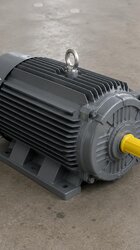
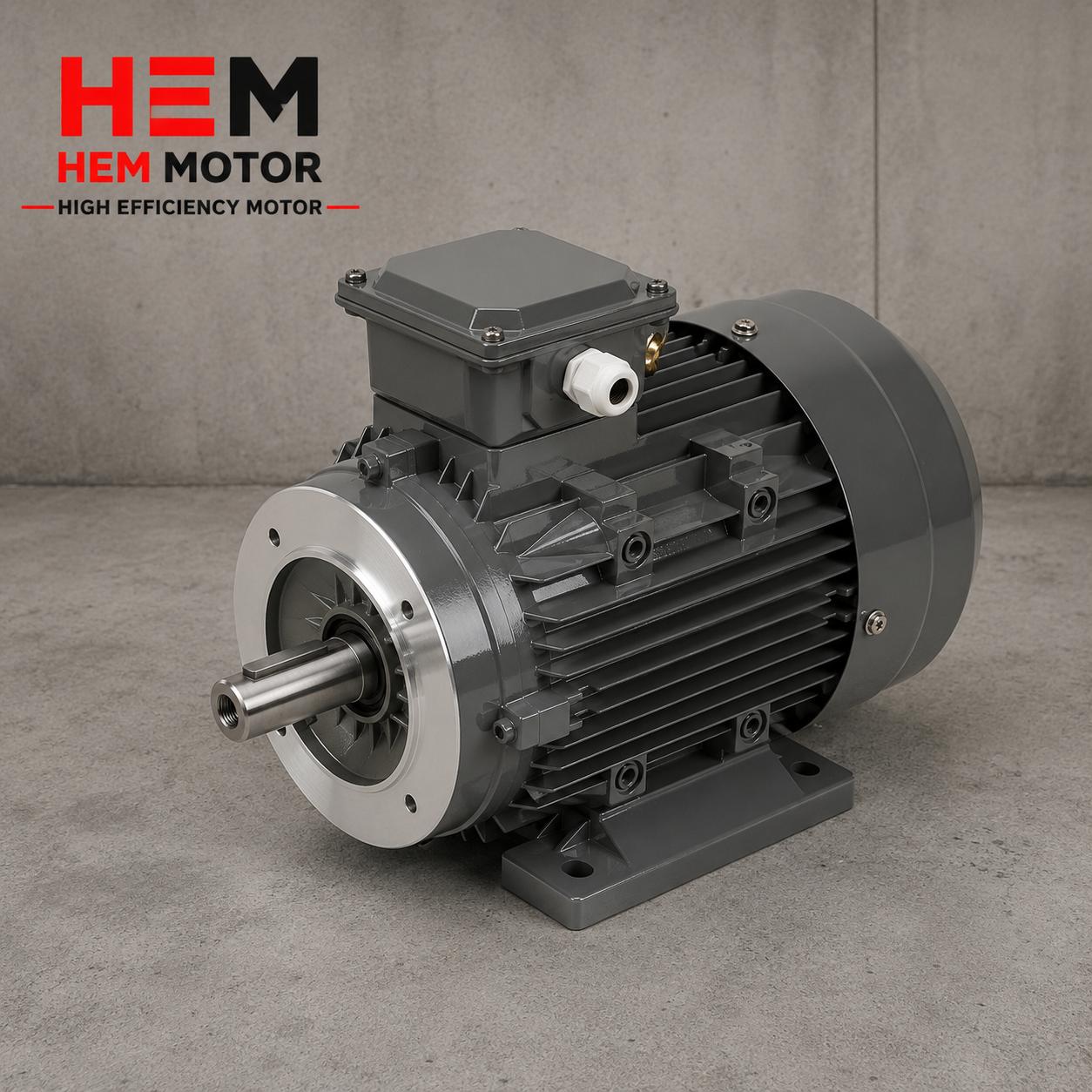

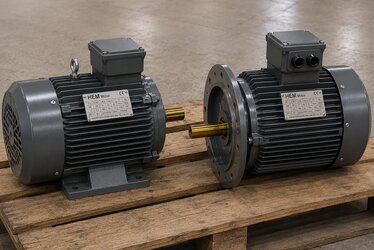
The basic question when choosing the right electric motor for a variable-speed application looks simple but decides the fate of your investment: is your load constant torque or variable torque? This distinction directly affects which motor and which drive you buy, how much energy you save and the correct power-speed choice. At HEM Motor, as manufacturer and supplier, we supply IE3 and IE4 efficiency-class three-phase asynchronous motors with frame, speed and mounting options suited to different load types. In this article we compare constant-torque loads such as conveyors and crushers with variable-torque loads such as pumps and fans, and explain drive compatibility and the right motor choice from a buyer perspective. For more selection guides, browse our Power and Speed Options category.

The Difference Between Constant Torque and Variable Torque
A machine's load type is defined by how the required torque and power change when speed changes. Knowing these two basic classes is the first step in motor and drive selection:
- Constant-torque load: the required torque stays roughly constant even as speed changes. The power drawn varies in direct (linear) proportion to speed. Conveyors, crushers, mixers, extruders, cranes and positive-displacement pumps are in this class.
- Variable-torque load: as speed drops, the required torque also drops rapidly. The power drawn varies with the cube of speed (the affinity law). Centrifugal pumps, fans and blowers are in this class.
This difference produces dramatic results especially when you adjust speed with a variable frequency drive (VFD). On a variable-torque load, lowering speed cuts power with the cube, so the saving is very large; on a constant-torque load, power falls linearly, so the saving is more limited. So to calculate the return on your investment correctly, you must first determine your load type. We detailed how the saving multiplies on pumps and fans through the cube-of-speed effect in our article high-efficiency motor + VFD.
Which Machine Is in Which Class?
To determine the load type correctly, look at how your machine works. Machines that move or crush material at constant speed (conveyors, crushers, mills) usually require constant torque; machines that accelerate a fluid (centrifugal pumps, fans) require variable torque. Positive-displacement pumps (screw, gear, piston) are in the constant-torque class despite handling fluid. Making this distinction clearly lets you choose both the motor power and the drive type correctly. We covered the right motor choice for conveyor drives in our article conveyor belt motor, and for crusher drives in crusher and stone-crushing motor selection.
Motor Selection in Constant-Torque Applications
On constant-torque loads such as conveyors, crushers, mixers and extruders, the motor must deliver roughly the same torque across the whole speed range. Points to watch in these applications:
- Sufficient starting torque: machines that start under load require high starting torque; choose the torque class by the load.
- Frame strength: a cast iron frame provides mechanical strength under constant torque and impact loads.
- Cooling at low speed: if it will run at low speed for long periods on a drive, independent (external) fan cooling may be needed, because the motor's own shaft fan slows down.
- Drive compatibility: on constant torque the drive adjusts speed, but the saving is not as large as on variable torque; the real gain comes from raising the efficiency class.
On impact loads (such as crushers) the motor's flywheel and inertia behavior matter; we examined this in our article motor selection on impact loads: flywheel and inertia. For torque-class selection, see our article asynchronous motor torque classes (Design N/H). See our cast iron motors suited to constant-torque applications on our IE3 electric motor page.

Motor Selection in Variable-Torque Applications
On variable-torque loads such as centrifugal pumps, fans and blowers, the motor requires much less torque as speed drops. Using a drive in these applications delivers the highest energy saving thanks to the affinity law. Points to watch:
- High efficiency class: an IE4 motor is the choice that cuts the bill the most on continuously running pumps and fans.
- Speed adjustment with a drive: as flow changes, speed is lowered and power falls with the cube; the saving is very large.
- Low starting torque: because pumps and fans start easily under load, soft starting methods such as star-delta or a softstarter are also suitable.
- IP55 and class F: protection suited to continuous duty in moist and dusty environments.
On variable-torque applications the IE4 + drive combination multiplies the saving by stacking two gains (high efficiency and speed optimization). We explained when a VFD is needed and how to choose it in our article VFD with an asynchronous motor. For flow and head calculation in pump selection, see our article centrifugal pump motor selection, and for our efficient motors see our high-efficiency electric motors page.
Drive Compatibility: Which Drive for Which Load?
Frequency drives usually come with two operating modes: a constant-torque mode and a variable-torque (pump/fan) mode. Choosing the mode suited to your load matters for both performance and safety:
- Constant-torque mode: for conveyors, crushers and mixers; the drive is sized to deliver full torque across a wide speed range.
- Variable-torque mode: for pumps and fans; since low torque is expected at low speed, the drive can be sized more economically.
A wrong mode or wrong sizing leads either to performance loss or unnecessary cost. We covered the cooling and low-speed risk on a drive-run motor in our article cooling and fan design in IE4 motors. To size the motor with the right power margin, see our article how heavily to load a motor and correct sizing.
Example Scenarios Comparing the Two Load Types
Let us see with concrete examples how much the saving changes when you connect the same drive to two different machines:
- Centrifugal fan (variable torque): on a fan whose air flow changes with the season, lowering speed by 20 percent cuts power by roughly half under the affinity law. In a continuously running plant this means a large drop in the annual bill.
- Conveyor (constant torque): on a conveyor slowed by the same amount, because power falls linearly the saving is far more limited; lowering speed 20 percent cuts power by about 20 percent.
This simple comparison explains why a drive investment pays back much faster on pumps and fans. On a constant-torque load a drive is usually fitted not for saving but for speed control, soft start or process need. So when making the investment decision you must first clarify your load type, then calculate the expected saving correctly. To assess the return on investment, use our total cost of ownership (TCO) approach and our article on the payback period of replacing an old motor with IE4.
Common Mistakes in Load-Type Selection
Misjudging the load type leads to choosing both the motor and the drive wrongly. The most common mistakes:
- Thinking a positive-displacement pump is variable torque: screw, gear and piston pumps are in the constant-torque class even though they handle fluid; this mistake leads to the wrong drive mode.
- Expecting cube savings on a constant-torque load: expecting the same saving on a conveyor as on a pump turns the investment into a disappointment.
- Ignoring starting torque: on a constant-torque machine that starts under heavy load, an inadequate torque class strains the motor.
- Leaving the speed range to the drive and not choosing poles: a motor with the wrong pole count uses the drive's operating range inefficiently.
To avoid these mistakes you must determine the load type correctly and size the motor accordingly. We gathered the most common mistakes in the buying process in our article the 7 most common mistakes when buying an electric motor. To find the right model step by step from the need, see our article electric motor types and buying map.
Choosing the Right Speed and Pole Count
Even though the drive adjusts speed in a variable-speed application, the motor's rated speed (pole count) must be chosen correctly. Pumps and fans usually use 2 or 4 poles, while conveyors and geared drives use 4 or 6 poles. A wrong pole choice makes you use the drive's operating range inefficiently. We examined the effect of pole choice on the application in our article which pole count for which job, and the difference between actual and synchronous speed in slip and actual speed. After choosing the right motor, if you are renewing an existing motor you must match frame, foot and shaft dimensions to keep mechanical compatibility. For larger power supply and a commissioning plan, see our article high-power motor supply above 90 kW.
Frequently Asked Questions
How do I tell whether my load is constant or variable torque?
Look at what torque is required when your machine's speed drops. Machines that move, crush or mix material (conveyors, crushers, mixers) require the same torque even at lower speed; these are constant torque. Centrifugal pumps and fans that accelerate a fluid require much less torque as speed drops; these are variable torque. If unsure, send us your machine type and application; we will determine your load type and recommend the right motor.
Does it make sense to use a drive on a constant-torque load?
Yes, if speed adjustment is needed a drive is also used on constant-torque loads; but the energy saving is not as large as on pumps and fans because power falls linearly, not with the cube. On a constant-torque application the real gain comes from raising the motor efficiency class to IE4 and from correct sizing. Contact us to evaluate the saving specific to your application together.
Which motor gains the most on a variable-torque application?
On variable-torque loads such as centrifugal pumps, fans and blowers, using an IE4 high-efficiency motor together with a frequency drive delivers the highest saving. Because speed drops to the real demand, power falls with the cube, and this gain repeats over the motor's life. Send us your plant operating profile and we will prepare a quote for the right IE4 motor and drive combination.
Get a Quote
Let us determine your load type for your variable-speed application and choose the right motor and drive together. Send us the machine type, power (kW), speed (rpm), mounting type and operating profile; we will match an IE3 or IE4 motor suited to your constant or variable-torque load and offer a fast quote. Reach us now at +90 (532) 345 49 86 or send your request via our contact page. HEM Motor is at your side as manufacturer and supplier.