English
 Türkçe

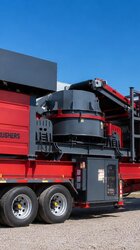
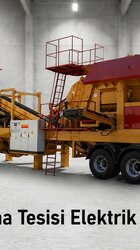
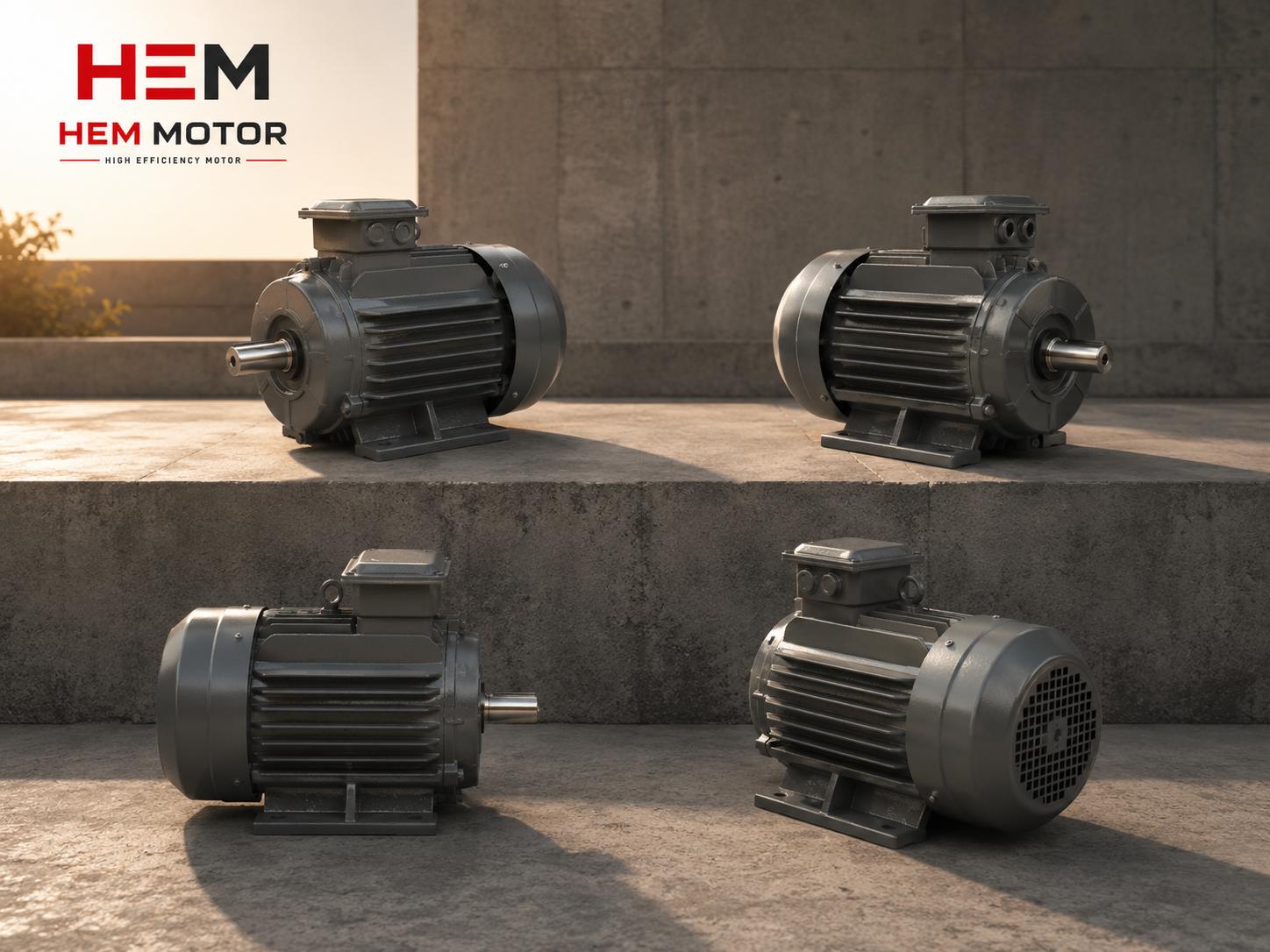

Motor selection in crushers, breakers, mills, and presses requires a completely different discipline from selecting a normal pump or fan motor. In these applications the load is not constant; sudden impacts, fluctuating torque, and high starting difficulties continuously strain the motor. In a stone crushing plant a wrongly selected motor either stops constantly or burns out quickly. As HEM Motor, when supplying motors for crusher and impact-load applications we always evaluate three concepts together: the flywheel effect, system inertia (GD² / moment of inertia), and high starting torque. This guide was prepared to help you correctly understand these three factors when selecting a motor for impact load, and to flawlessly supply a motor that runs reliably in the field for crusher drive.

What Is Impact Load and Why Does It Strain the Motor?
Impact (shock) load is a load type where torque rises and falls suddenly over short periods. In a jaw crusher, each large stone piece entering the jaw creates an instantaneous torque increase; when the stone is crushed, the torque drops. This continuously rising and falling load profile fluctuates the motor current and temperature. While a motor runs comfortably in a constant-load application, it is under continuous stress at impact load.
The main difficulties this load type brings are: the need for high starting torque, the risk of pull-out torque at sudden torque increases, increased heating due to fluctuating current, and mechanical vibration. For this reason crusher motors must be selected sturdier, higher-torque, and more durable than standard motors of the same power. We addressed the basic motor selection for crusher and stone crushing plants in terms of power, speed, and stock in our electric motor selection for crusher and stone crushing plant article.
The Flywheel Effect: The Mechanism That Softens the Impact
At the heart of crusher design lies the flywheel. The flywheel is a large-mass rotating wheel that stores energy kinetically. At the moment of stone crushing, the flywheel supplies the major part of the sudden energy demand the motor cannot meet alone, because the rotating mass of the flywheel acts like an energy store. When crushing ends, the motor refills the store by accelerating the flywheel again.
Thanks to this mechanism the motor does not have to produce the maximum torque alone at every impact; the flywheel absorbs a significant part of the load. The effectiveness of the flywheel depends on its rotating mass and the square of its radius; a larger and heavier flywheel stores more energy and softens the impact better. For the motor, this means a smoother current profile and less thermal stress.
The Division of Labor Between Flywheel and Motor
In a properly designed crusher the motor meets the average power while the flywheel manages the peak loads. Therefore the crusher motor must be selected not only by the peak torque but by evaluating the average load and flywheel capacity together. While the motor is constantly strained in a crusher with a small flywheel, the same motor runs comfortably with a correctly sized flywheel. Ignoring this division of labor in motor selection leads to choosing either an oversized or an insufficient motor.
Inertia (GD²) and Moment of Inertia: The Determinant of Starting
The second critical concept in impact-load applications is inertia. System inertia is traditionally expressed by GD² (flywheel effect) or moment of inertia (J). The crusher, flywheel, and pulleys together form a large rotating mass; bringing this mass from standstill to rated speed requires high starting energy.
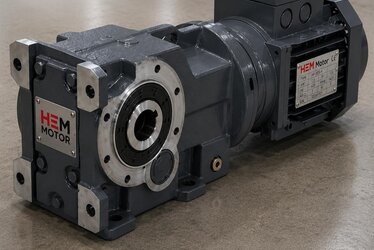
While accelerating a high-inertia load, the motor draws high starting current for a long time. During this time the windings heat up; if the start takes too long the motor trips on thermal protection or the winding is damaged. For this reason crusher motors must be motors that can both produce high starting torque and thermally withstand a long starting time. The cast iron body provides a decisive advantage here, because it is durable against impacts and dissipates heat well. Our stone crushing and screening plant motors are produced precisely for this reason with a cast iron body, reinforced bearing structure, and IP55 protection.

High Starting Torque: Design N or Design H?
In asynchronous motors the starting torque characteristics are defined by torque classes (Design N, Design H). While Design N is sufficient for standard applications, Design H type motors are preferred in crusher, breaker, and mill applications requiring high inertia and high starting torque. Design H motors produce higher torque at start and are more successful at accelerating heavy loads.
The torque class selection is made according to the moment of inertia of the load and the starting frequency. A frequently stopping-and-starting crusher requires a different torque profile from a continuously running application. We explained torque classes and selection by load in detail in our asynchronous motor torque classes (Design N/H) and starting torque article. Similar principles apply in applications requiring high starting torque such as plastic crushing and woodworking; for these sectors our motor selection in plastic injection and crushing machines article helps you choose by load profile.
Starting: The Correct Method at Impact Load
Starting a high-inertia crusher with the correct method protects both the motor and the grid. There are three basic options:
- Direct on line (DOL): The simplest method but draws high starting current. Can be preferred at small powers and on a strong grid.
- Star-delta: Reduces the starting current but also reduces the starting torque; the motor may not transition to delta on a high-inertia load.
- Soft starter: Protects both the motor and the belt-pulley system by gradually increasing current and mechanical impact; the most common choice in crushers.
The choice of the correct starting method directly affects the motor lifespan and commissioning safety. We addressed crusher-specific starting strategies in our starting the crusher motor article, and compared general starting methods in our star-delta or soft starter article. In generator-powered mobile plants, the starting current creates a separate problem; for these situations review our motor selection on generator-powered sites article.
The Mechanical Connection of the Motor in Crusher Drive
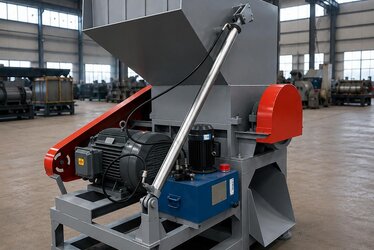
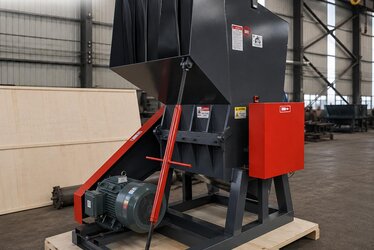
Crusher motors are mostly driven by V belt-pulley; this is the standard way to transmit power to the flywheel pulley. In belt drive the motor shaft, pulley balance, and belt tension require careful adjustment. An over-tensioned belt fatigues the shaft and bearing; a loose belt creates slipping and efficiency loss. In these applications B3 foot-mounted motors are preferred with a shaft and key structure suitable for belt-pulley connection.
The rigidity of the cast iron body preserves shaft alignment in belt-driven and vibrating drives. To choose the correct mounting type you can review our electric motor mounting types page. To not miss the compatibility of shaft diameter, key, and pulley balance, our motor shaft diameter and key dimensions article is a complementary resource. For heavy impact applications, our cast iron bodied IE4 motors are offered in the 0.25 kW - 355 kW range with reinforced bearings and IP55 protection for stone crushing.
Stock and Redundancy That Reduce Downtime Cost
In a crusher plant a motor failure means not only the repair cost but also a production stoppage. In a stone crushing plant with high hourly output, a one-day stoppage is a serious loss. Therefore in impact-load applications the spare motor strategy is as important as the motor selection. Keeping crusher motors of critical powers in stock provides replacement within hours in case of failure.
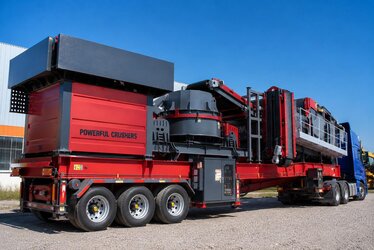
We addressed methods of reducing downtime cost in a crusher plant in our motor failure and downtime cost in a crusher plant article, and supply in mobile and portable plants in our motor supply in mobile crusher and portable crushing plant article. To prepare the critical spare motor list in advance, our critical spare motor list article guides you.
Motors Beyond the Main Crusher: Screen, Feeder, and Belt
In a crushing-screening plant the only motor is not the main crusher. The entire plant consists of a group of motors that must work in harmony with each other: the vibrating feeder, the screening machine (screen), conveyor belts, and washing units. Each of these motors has a different load profile and requires different selection criteria.
Because the vibrating feeder and screen motors run under continuous vibration, they must be motors with high mechanical strength and reinforced bearings. Conveyor belt motors, on the other hand, require high starting torque, because setting a full belt in motion from standstill is a loaded start. In the selection of these motors too, speed, power, and mounting type are evaluated together. We addressed the selection of motors beyond the main crusher in detail in our screen, feeder, and belt drive in a crushing-screening plant article. For one-to-one replacement when a conveyor belt motor fails urgently, our conveyor belt motor emergency replacement article offers a fast solution. When building a stone crushing plant, planning this entire motor group together prevents incompatibility later.
Motor Protection Against Dust, Moisture, and Impact
A stone quarry and mine site is one of the most demanding environments for a motor. Continuous dust, seasonal moisture, vibration, and mechanical impact together wear the motor. Under these conditions motor protection is an inseparable part of motor selection. The IP55 protection class provides basic assurance against dust and water spray; in more demanding conditions higher IP classes are evaluated.
The cast iron body offers two separate advantages in these sites: mechanical strength against impacts and the capacity to dissipate heat. While an aluminum bodied motor wears early in an impact-prone and dusty site, the cast iron body preserves its form and performance. The sealing of the terminal box and correct cable gland selection are also critical in preventing dust and moisture ingress. We detailed motor protection in stone quarry and mine sites in our motor protection in stone quarry and mine site article, and IP protection in terminal and cable connection in our motor terminal box and cable connection article. The lifespan of a motor running under impact load is significantly extended with the correct protection selection.
Frequently Asked Questions
Should I select the crusher motor by power?
Selecting by power alone is not enough. In a crusher the load is impact-type and the system inertia (GD²) is high; therefore you must select the motor by evaluating the average power, peak torque demand, flywheel capacity, and starting frequency together. Usually a Design H type, high-starting-torque, cast iron bodied motor is preferred. For the correct selection, communicating the crusher type, capacity, and flywheel size to us is the healthiest way.
Does the flywheel reduce the motor power?
The flywheel does not reduce the motor average power but manages the peak load demand. It meets the major part of the sudden energy demand at the moment of stone crushing with its stored kinetic energy, so the motor does not have to produce maximum torque alone at every impact. This allows the motor to run more smoothly and with less heating. A correctly sized flywheel makes motor selection easier.
Which starting method is suitable for a crusher motor?
In high-inertia crushers the most common choice is the soft starter, because it protects both the motor and the belt-pulley system by gradually increasing current and mechanical impact. Star-delta may be insufficient on a high-inertia load because it reduces the starting torque. Direct on line starting is suitable only at small powers and on a strong grid. The method choice is made according to motor power, moment of inertia, and grid capacity.
Get a Quote
Let us supply a high-starting-torque, cast iron bodied motor suitable for impact load for your crusher, breaker, or mill plant by sizing it correctly. Share the crusher type, capacity, flywheel size, and your starting method; let us present the suitable motor and a critical spare plan. Call us at +90 (532) 345 49 86 or reach us through our contact page; let us plan a motor supply that runs without downtime in your stone crushing plant.