English
 Türkçe

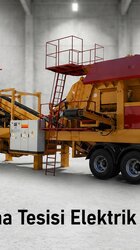
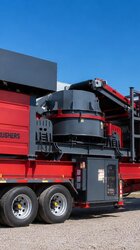
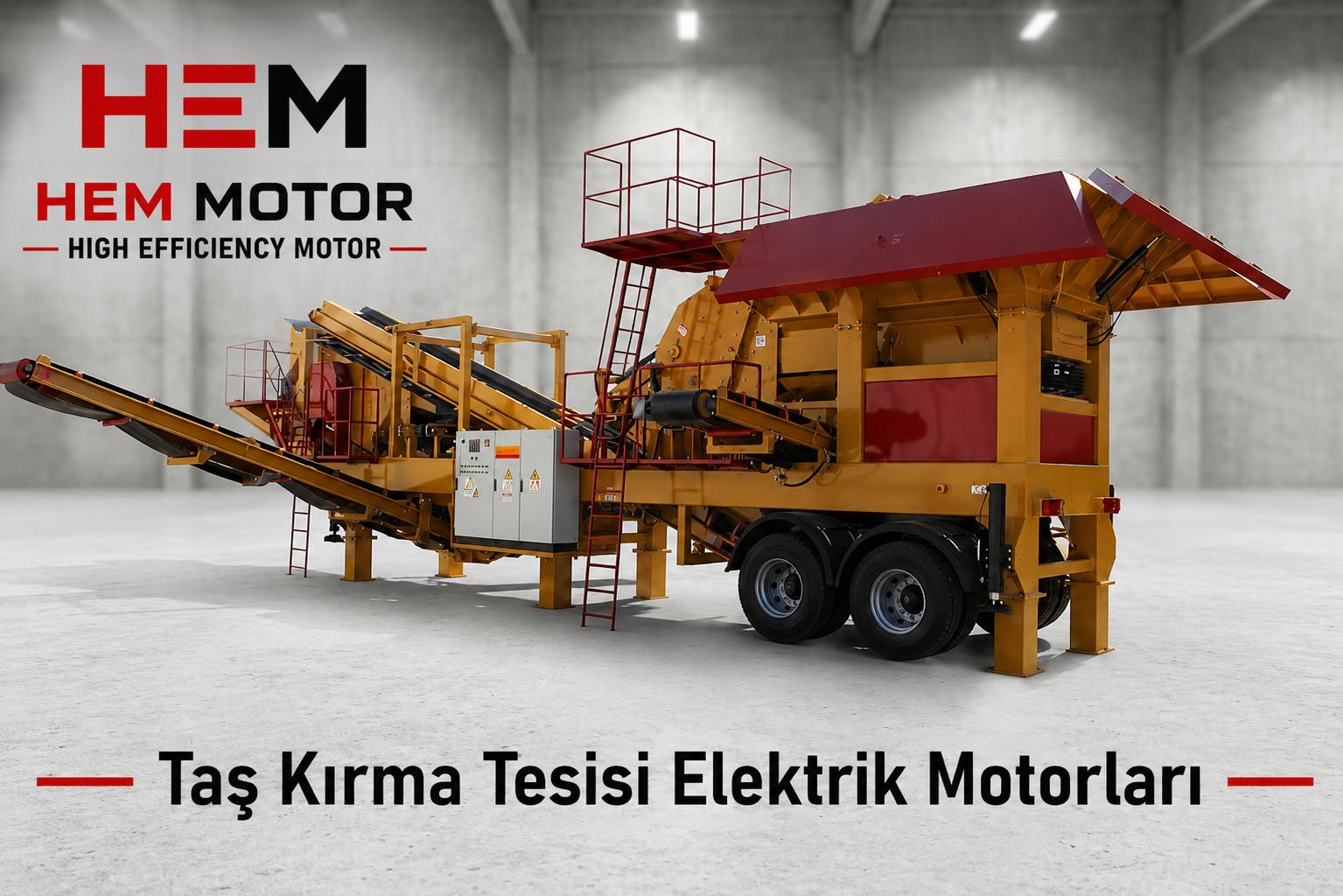

Crusher and stone crushing plants represent one of the harshest working environments in industry. In these plants, where tons of rock are broken in seconds and dust, vibration and sudden load changes prevail, the electric motor must operate under conditions very different from those of a standard factory motor. Irregular feeding, sudden full-load surges and high-inertia starting take motor selection well beyond an ordinary industrial choice. In this guide we examine the right power, the right speed and the right stock approach for crusher and stone crushing applications; the typical failures caused by the wrong choice; and why a robust motor runs trouble-free for years in these plants.
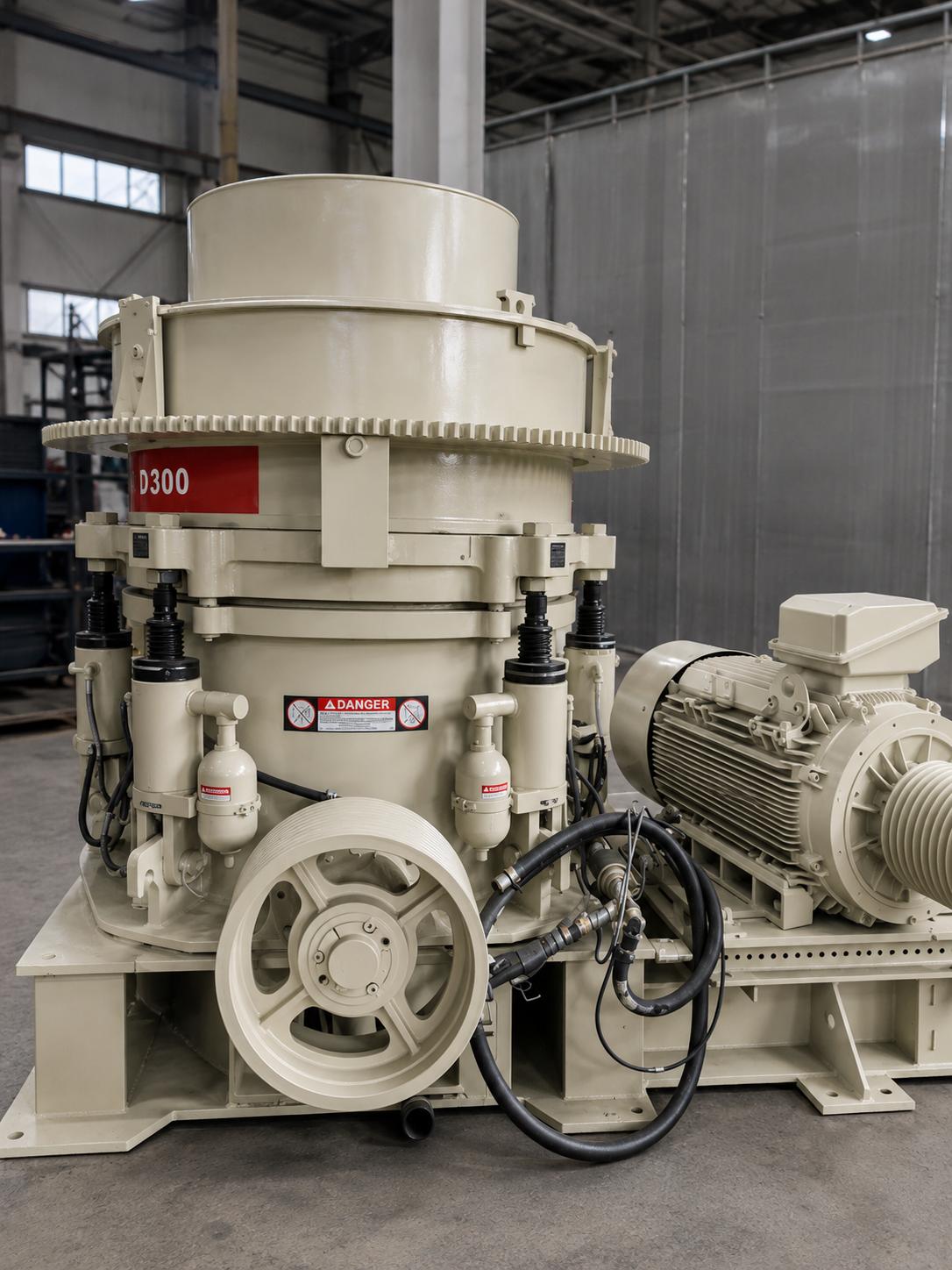
Why Are Crusher Motors Selected Differently from Standard Industry?
A fan motor in a textile factory or a water pump motor mostly runs under a steady, predictable load. Crusher motors, by contrast, work in the opposite world. The amount of material coming off the feed belt changes constantly; sometimes a large mass of rock drops into the crusher at once and the motor is suddenly forced to full load, or even beyond it. These sudden full-load surges require the motor to be selected to be far more durable both mechanically and thermally.
Another critical difference is starting behavior. In jaw or impact crushers the flywheel and moving masses have very high inertia. As the motor brings this large mass from standstill up to operating speed, it experiences a long, high-current start. A standard motor overheats during this high-inertia start; whereas a motor correctly selected for a crusher, with high starting torque and adequate thermal reserve, handles this load without trouble.
The Main Factors That Make Crusher Applications Difficult
- Irregular feeding: Because material flow is intermittent, the load constantly rises and falls and the motor must withstand variable conditions.
- Sudden full load: A large piece dropping into the crusher instantly forces the motor to full load or beyond.
- High inertia: Because of the flywheel and moving masses, starting takes a long time and draws high current.
- Dust and vibration: Abrasive ambient dust and constant vibration affect the choice of frame, bearings and sealing.
- Continuous heavy duty: The plant usually runs uninterrupted across long shifts.
The Cost of Choosing the Wrong Power or Speed
The most expensive mistake in a crusher motor is selecting it undersized or at the wrong speed. This mistake usually looks cheap at the moment of purchase; but its cost is paid heavily in the first months. An underpowered motor is constantly strained during sudden load surges, draws excess current and burns its windings as they heat up quickly. The wrong speed selection creates a mismatch in the mechanical transmission and shortens belt and pulley life.
A poorly selected crusher motor typically reveals itself through the following symptoms:
- Burnt windings: Continuous overload and high temperature wear out the insulation and lead to early winding burnout.
- Bearing damage: High vibration and incorrect loading cause the bearings to fail much sooner than expected.
- Constant thermal tripping: The protection relay trips frequently, stopping the plant and causing production loss.
- Efficiency and torque drop: The strained motor cannot deliver its rated performance and crushing capacity falls.
Each of these failures grows exponentially through both the cost of replacing the motor and the production loss caused by the plant stopping. That is why the right power and speed selection in a crusher motor is the most profitable investment to make from the start.
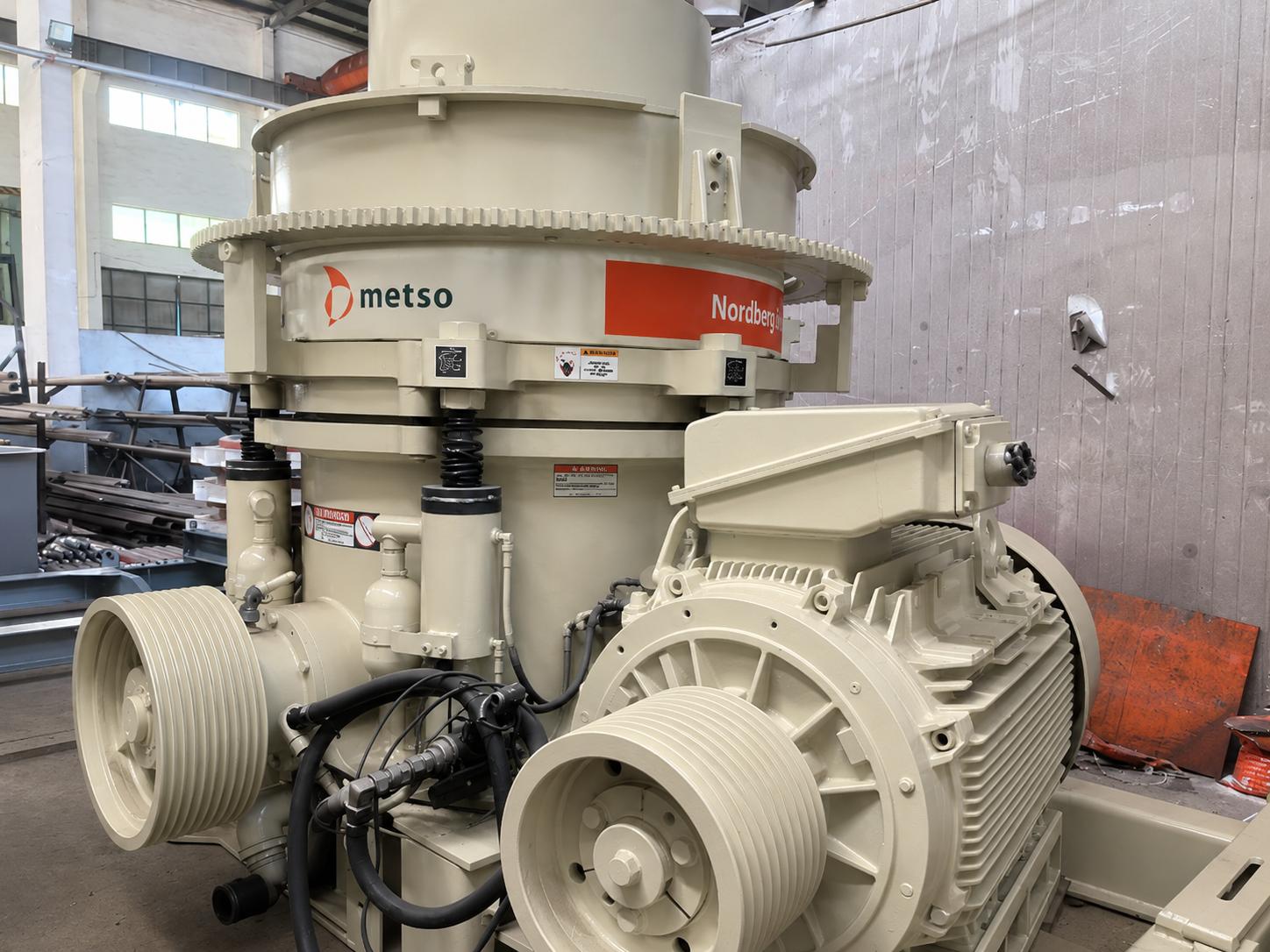
How Is the Right Power and Speed Determined?
When determining the right motor for a crusher, looking only at the nominal power value in the crusher catalog is not enough. For a sound selection the following steps should be followed:
- Identify the crusher type and the manufacturer's recommended motor power; jaw, impact and cone crushers have different torque profiles.
- Leave an appropriate power reserve, taking into account the irregularity of feeding and possible instantaneous peak loads.
- Choose the right speed class according to whether the drive is belt-and-pulley or direct-coupled; too high or too low a speed lowers transmission efficiency.
- Prefer a motor with a high protection class and a robust frame, considering the dusty and abrasive nature of the environment.
- Select a motor with sufficient starting torque by assessing the starting conditions and inertia.
In these applications cast iron frame motors stand out. A cast iron frame dampens vibration better, is more resistant to mechanical shocks and dissipates heat more effectively. As a result, motor life is significantly extended under heavy-duty conditions such as crushing.
The Role of IE3 and IE4 Efficiency Classes in Crushers
Because crusher plants generally run long hours, the energy cost is very high. For this reason high-efficiency IE3 and IE4 motors provide serious energy savings alongside heavy-duty endurance. High-efficiency motors run at a lower temperature, which extends winding and bearing life in dusty environments. Therefore the right efficiency class selection both lowers the bill and increases reliability.
The Importance of Stock and Fast Supply
In a crusher plant, a motor failure means all production stops. In such plants every hour of downtime means direct loss. That is why being able to supply the right power and speed motor quickly from stock is critically important. HEM Motor delivers cast iron frame IE3 and IE4 motors quickly from strong stock across a broad power range from 0.55 kW up to 355 kW, minimizing plants' waiting time.
The technical support that comes with manufacturer assurance also guides the right power and speed selection; so the plant owner buys not just a motor but a long-lasting, trouble-free solution. You can request a quote for current electric motor prices and models suited to crusher applications.
For more on heavy-duty motors you can review our advantages of cast iron frame motors content, and for the right power selection you can read our industrial motor power calculation article.
Maintenance and Long Life in Crusher Motors
Keeping a motor long-lived under heavy-duty conditions is as important as choosing the right one. Dust in the crusher environment gradually clogs the motor's cooling fins and fan cover, making heat dissipation harder. Regular cleaning is therefore critical to keeping the motor running at its rated temperature. The following maintenance practices significantly extend the life of crusher motors:
- Cleaning cooling surfaces: Dust buildup on the fan cover and frame fins should be cleaned at regular intervals so that heat dissipation is not obstructed.
- Vibration monitoring: Increasing vibration is the first sign of pulley imbalance or bearing wear; early detection prevents major failures.
- Bearing greasing: Lubrication at the manufacturer's recommended intervals with the correct grease type directly affects bearing life.
- Belt tension: Loose or over-tight belts both lower transmission efficiency and put extra load on the shaft and bearings.
- Thermal protection checks: Make sure the protection relay is set correctly; if it trips frequently, the root cause should be investigated.
These simple but regular maintenance steps allow the motor to reach its expected life even under heavy-duty conditions. A robust-frame, high-protection-class motor combined with the right maintenance becomes one of the most reliable components of the crusher plant.
The Importance of Frame Type and Protection Class
In dusty and humid environments such as crushers, the material of the motor frame and its protection class directly determine durability. A cast iron frame is far more resistant to mechanical shocks and vibration than aluminum; it also spreads heat over a wider surface, helping the motor stay cool. A high protection class protects the windings against the ingress of dust and water, which extends insulation life in abrasive environments.
Although the right frame and protection class selection makes only a small difference in the initial investment, it greatly reduces the failures and downtime experienced over the motor's life. In crusher applications this choice should never be overlooked.
Frequently Asked Questions
Why can't a standard industrial motor be used for a crusher?
Because a crusher motor is exposed to demanding conditions not seen in standard industry, such as irregular feeding, sudden full load and high-inertia starting. A standard motor quickly suffers burnt windings and bearing damage under these conditions. Crushers require robust-frame motors with high starting torque and thermal reserve.
How quickly does a motor fail if the wrong power is chosen?
A motor chosen underpowered or at the wrong speed often begins to show symptoms within the first few months. Constant thermal tripping, overheating, burnt windings and bearing damage are the most common outcomes. That is why the selection must be made correctly from the start, with the necessary power reserve.
How quickly can I obtain a crusher motor?
When the right power and speed motor is in stock, delivery is very fast. Because HEM Motor delivers IE3 and IE4 motors from strong stock across a broad power range, plant downtime is minimized. At the quotation stage it is recommended to evaluate power, speed and delivery time together.