English
 Türkçe


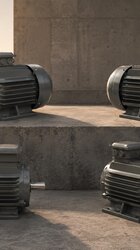

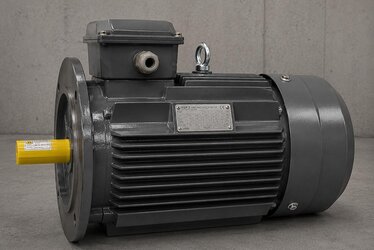
When you buy an electric motor, the first question that comes to mind is usually the price. Yet for a business running a production line, the truly critical question is far simpler: "When will I have this motor in my hands?" Because when a line stops, every lost hour turns directly into money, a missed deadline, and an unhappy customer. In this article we look, from the buyer's point of view, at the difference between stock delivery and a production order, which motor falls into which category, and how to minimize your lead time.
Many purchasing decisions chase a supplier whose price is a little cheaper while overlooking delivery time. In the end the motor arrives three weeks later, and during those three weeks the line has been idle. The right approach is to distinguish clearly, before ordering, whether your need is a stock motor or a production order. This distinction lets you set the right expectation and plan a realistic lead time.
Why Lead Time Can Matter More Than Price
When a conveyor motor, a pump motor, or a crane reducer fails, the problem is not just the value of that motor. The entire line it feeds stops. Spoiled product in a food plant, an unfinished batch in textiles, a cooling ladle in a foundry; all of these are losses many times greater than the price of the motor. That is why, in emergencies, delivery time becomes a far more decisive cost item than the motor's list price.
For planned investments the situation is a little different. When building a new line you plan months in advance and can comfortably accommodate a production order's lead time. But in both cases the critical thing is to set the right expectation from the start. When you take a quote from a supplier, you need to clarify not only the number but also the answer to "when will it be delivered?"
Which Motors Are Delivered From Stock?
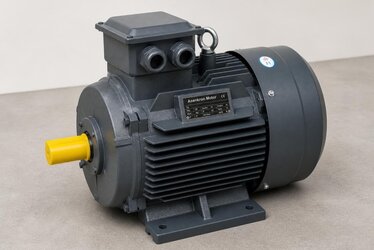
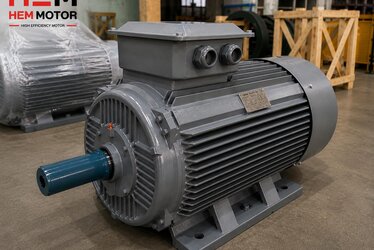
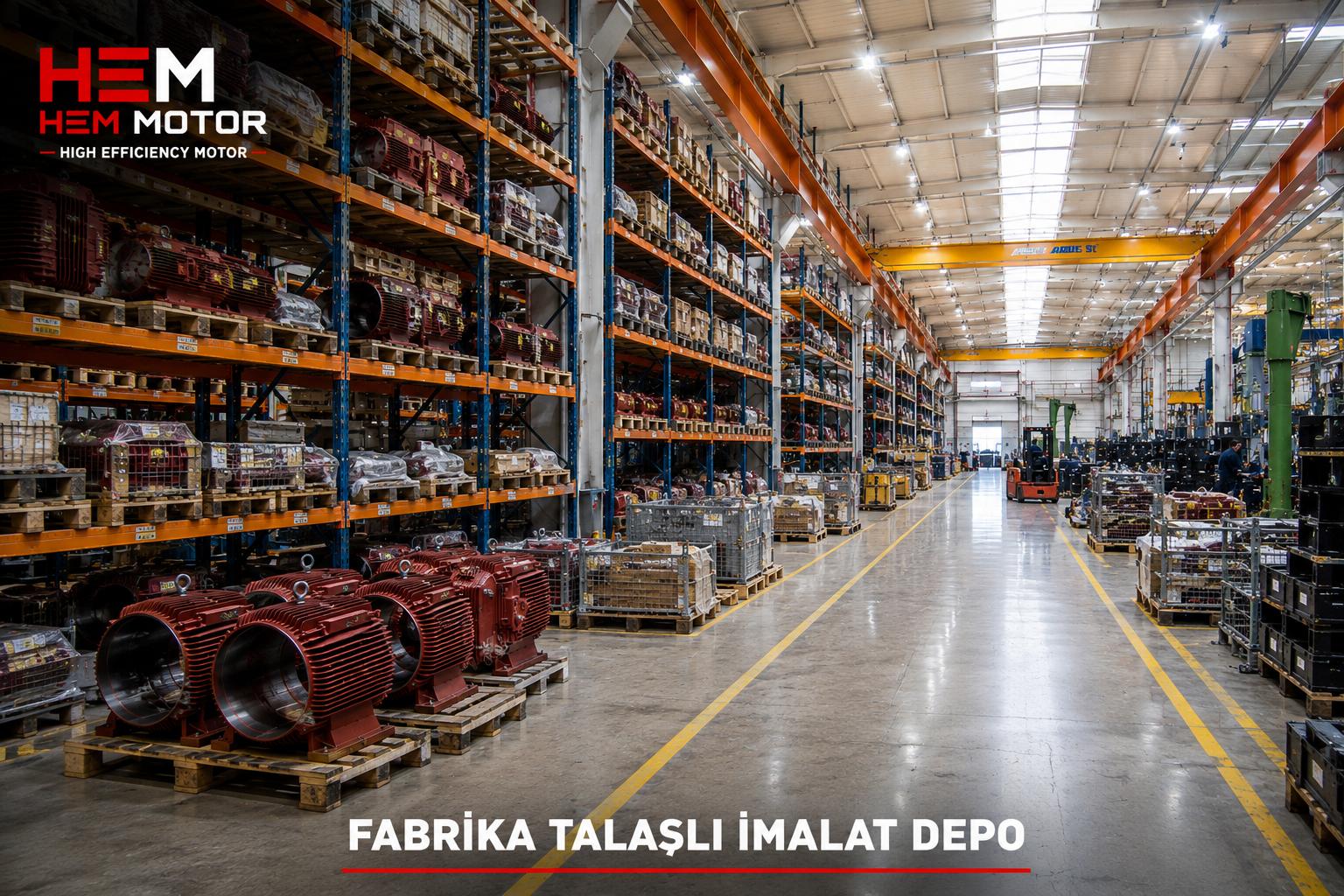
Whether an electric motor is held ready in stock depends on it being one of the most frequently demanded standard configurations on the market. Manufacturers and suppliers continuously stock the most-moving power-speed-mounting combinations. In general, motors with the following features fall within stock delivery:
- Standard power ratings: Common kW steps that fit IEC norms (such as the 0.75; 1.1; 1.5; 2.2; 4; 5.5; 7.5; 11; 15; 18.5; 22; 30 kW series).
- Standard speed/pole count: 2-pole (≈3000 rpm), 4-pole (≈1500 rpm), and 6-pole (≈1000 rpm) are the most commonly stocked speed classes.
- Standard mounting type: Foot-mounted (B3), flange-mounted (B5, B14), and foot-flange combinations (B35, B34) are common mounting forms.
- Standard efficiency class: In today's market the IE3 Premium and increasingly IE4 Super Premium classes are the most active stock items.
- Standard voltage and frequency: 400V / 50 Hz three-phase supply is stocked to match the standard grid of Turkey and Europe.
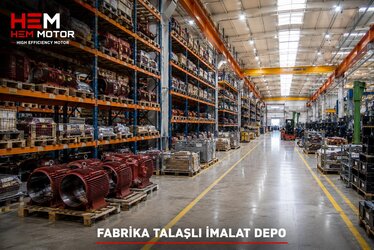
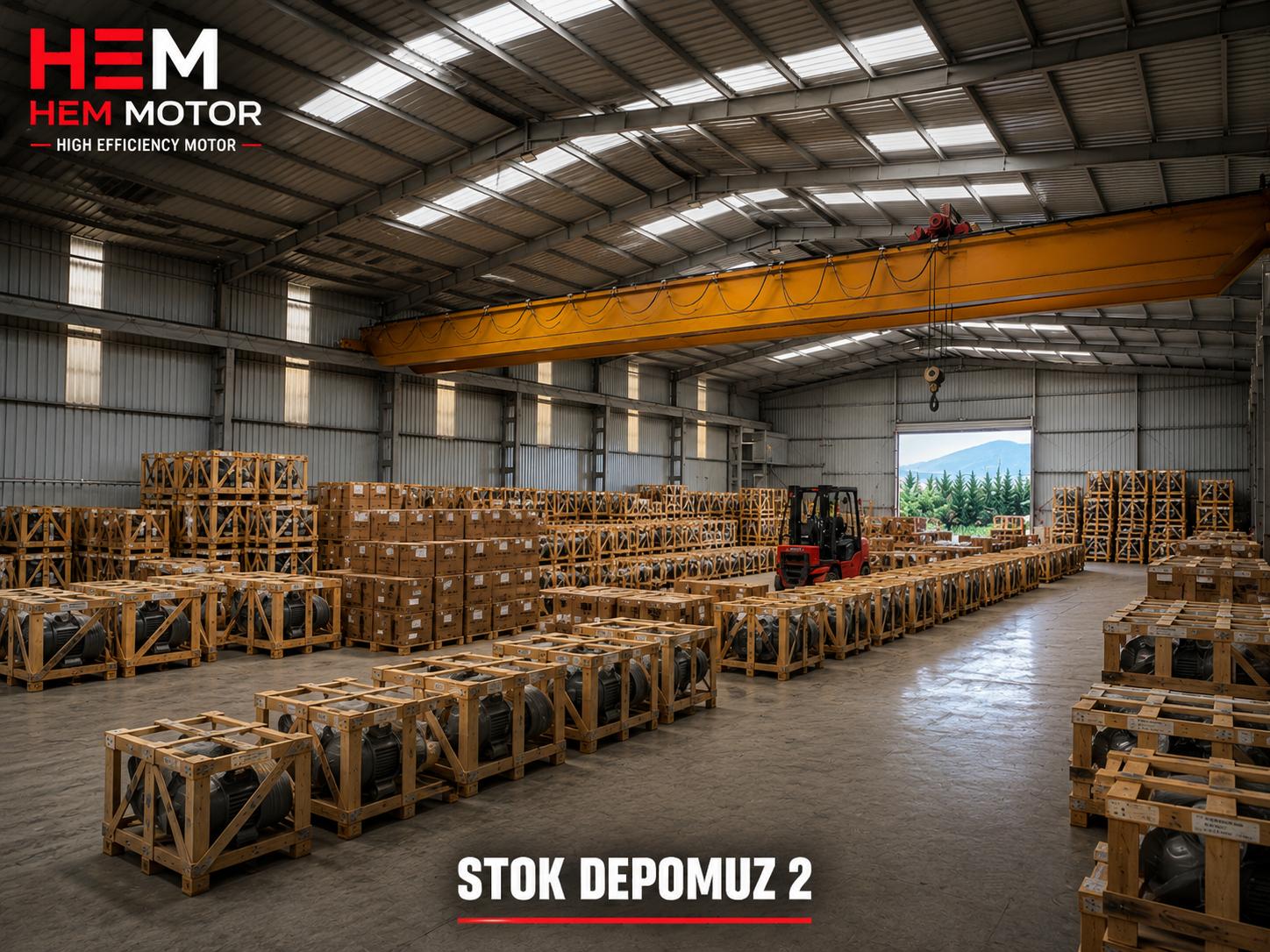
A motor whose every feature stays within the standard range can often be shipped the same day or with a very short lead time. This is the greatest advantage of working with a supplier that has stock assurance: delivery measured in hours at the moment of failure. To confirm current electric motor prices and stock status from the right source is the first step of planning.
Motors That Require a Production Order
Not every need fits on a standard shelf. Some applications call for motors that move rarely on the market or must be specially designed. These motors generally do not wait in stock; instead they are placed on a planned production schedule upon order. Typical situations in the production order category are:
- High-power motors: High-kW motors in the 315 frame class and above, weighing hundreds of kilograms, are generally built on a project basis.
- Special voltage/frequency: Non-standard electrical demands such as a 60 Hz grid, special voltage windings, or two-speed special connections.
- Special protection class and environment: Specialized motors such as Ex-proof (explosion-protected), high IP protection, marine type, or special temperature class.
- Special shaft, flange, or frame: Mechanically customized products such as non-standard shaft diameter, special flange hole pattern, brake motor, or motor with encoder.
- Special paint, label, and certification: Projects requesting a customer-specific color, brand, nameplate, or a particular certification set.

A production order, by its nature, requires a planned lead time. This period covers the steps of material sourcing, winding manufacture, assembly, testing, and shipping. What matters here is clarifying the lead time from the start and weaving it into your project schedule. When planned correctly, a production order is not a disadvantage but a solution that fits your need exactly. For your special projects, a quote and lead-time discussion is the soundest beginning.
Defining Your Need Correctly Before Ordering
The way to minimize your lead time runs through clarity before the order. To understand whether your need is stock or production, preparing the following information in advance speeds the process:
- Power (kW): The real power requirement of the machine you drive.
- Speed / pole count: The actual operating speed the application demands.
- Mounting type: The connection form that determines whether it is foot, flange, or combined.
- Efficiency class: Whether you want IE3, IE4, or a class required by regulation.
- Environmental conditions: IP and protection requirements such as humidity, temperature, dust, and explosion risk.
- Shaft and flange dimensions: The mechanical dimensions that must fit the existing machine exactly.
A buyer who comes with this information has asked the supplier the right question, and the other side can answer clearly: "this comes from stock" or "we need to manufacture this." This clarity prevents the wrong motor arriving and a second delivery round. The same information is a lifesaver when choosing an exact equivalent motor selection from stock.
The Right Strategy in an Emergency
When a motor fails unexpectedly, you have two options: either wait for exactly the same special motor through a production order, or get the line back up immediately with an exact equivalent motor from stock. For most businesses the right choice is the second. Thanks to the IEC standard, a stock motor whose frame, mounting, and shaft dimensions match will usually fit in place of the failed motor, keeping production loss limited to hours.
This strategy is only possible with a supplier that has strong stock assurance. Working with manufacturer assurance ensures both that the correct equivalent is selected and that delivery actually arrives within the promised time. In an emergency the most valuable thing is a supply source that can say "yes, we have it" and actually ships.
Managing the Stock and Production Balance
Experienced buyers strike a balance for critical motors. They keep a spare in stock for the motors that are the lifeblood of the line and whose downtime is the most expensive, or they secure a source that can supply them fast. Special and high-power motors, on the other hand, they tie to a production order by planning ahead. This way they are neither left helpless in an emergency nor needlessly hold every motor in stock.
This balance lowers the business's total cost of ownership. Supplying the right motor, at the right time, through the right channel saves far more than hunting for price. Because the real cost is hidden not on the motor's label but in the hours the line is down.
Frequently Asked Questions
Is a standard IE3 motor usually delivered from stock?
Yes. IE3 and IE4 motors in common kW, standard speed (2-4-6 pole), and standard mounting type are the most frequently stocked items. A motor with these features can often be shipped with a very short lead time. Still, for certainty it is best to confirm stock before ordering.
What determines a production order's delivery time?
A production order's lead time is the sum of material sourcing, winding manufacture, assembly, testing, and shipping. The motor's power, special requirements, and certification needs all affect this period. What matters is clarifying the lead time from the start and placing it correctly into your project schedule.
In an urgent failure, should I wait for my special motor or take an equivalent?
In most cases the most sensible solution is to get the line back up immediately with an exact equivalent motor from stock. Thanks to the IEC standard, a stock motor whose frame, mounting, and shaft dimensions match usually fits in place of the failed one. You can then supply your special motor afterward as a spare through a planned production order.