English
 Türkçe




In bulk electric motor purchasing, what determines your total cost is, contrary to common belief, not the sticker price of a single motor. The real cost is set by your stock security, delivery speed, the standardization of your motor fleet, and the efficiency class of the motors you choose. A buyer who haggles to push a motor's price down by a few units, without factoring in the cost of a line standing idle for days because of one late-arriving motor, has not actually gained anything. In this article we explain 8 concrete, field-tested methods that structurally lower your total cost in wholesale motor purchasing.
Why Total Cost Is Not Just the Sticker Price
When you buy an electric motor, the money you pay is only a small part of the total cost that motor will bring you. The energy it consumes over its lifetime, maintenance expenses, downtime caused by failures, and the ease of sourcing spare parts are far larger items than the sticker price. A business buying in bulk captures real savings when it can manage these items together.
8 Ways to Cut Costs
1. Buy From the Manufacturer or Primary Supplier
Every commercial intermediary adds its own margin to the price. Buying directly from the manufacturer or primary supplier removes the margin these links add. In bulk purchasing, this difference, though small per motor, reaches a significant sum in total.
2. Standardize Your Motor Fleet
Instead of dozens of motor varieties in different brands, powers, and mounting types, lean toward standard power and mounting types as much as possible. Standardization reduces the number of spare motors, simplifies installation, and eases your maintenance team's work. A few standard types are always more economical than many special types.
3. Invest in Efficiency Class
High-efficiency motors such as IE4 instead of IE3, though slightly costlier at first, close the gap quickly through electricity savings on heavily used motors. In bulk purchasing, raising the efficiency class is the largest savings item over the years. To compare efficiency classes, review our electric motor prices page.
4. Plan Stock Security in Advance
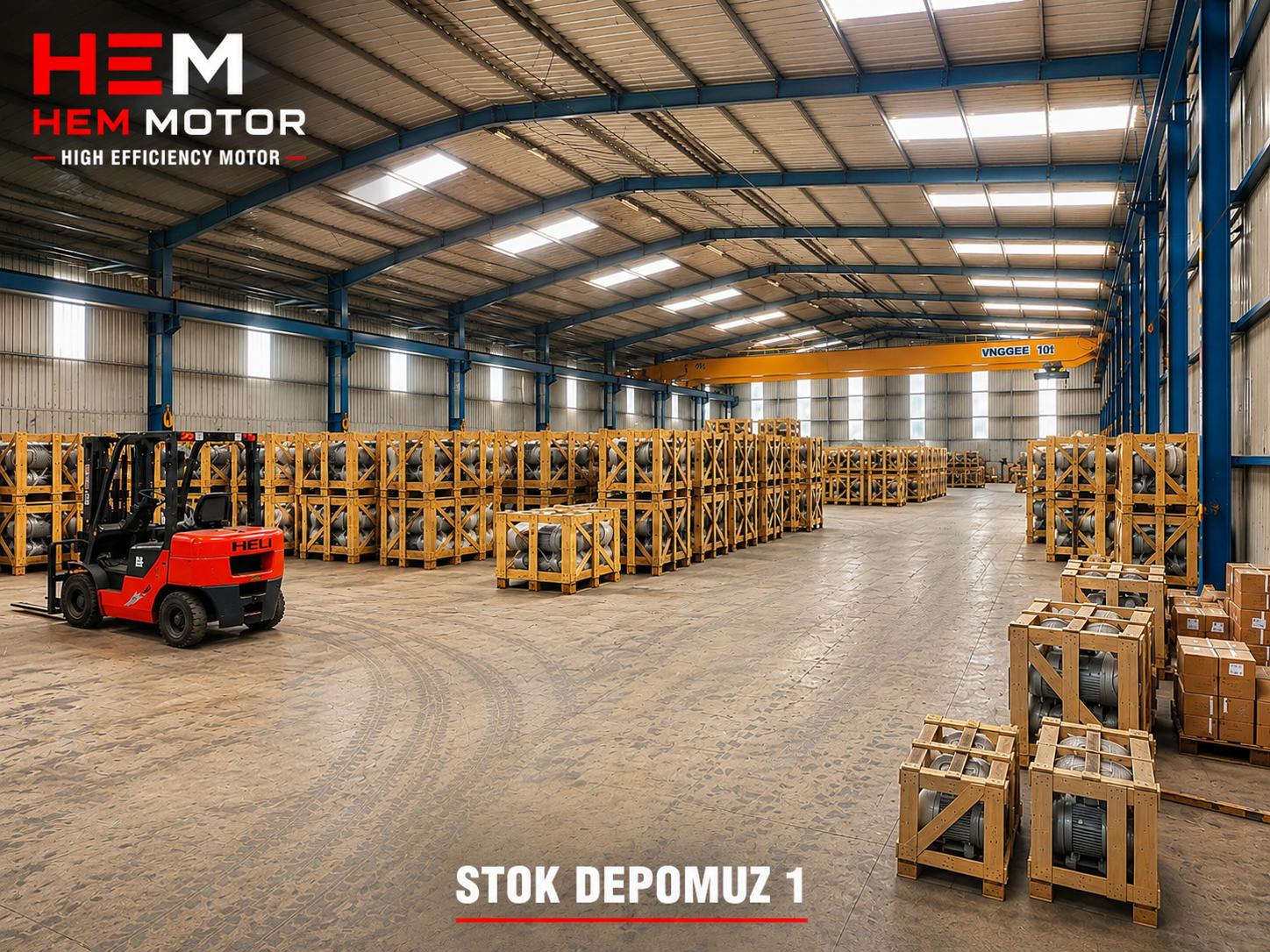
Procure critical spare motors in advance for your most-used powers and types. Waiting weeks for delivery when a motor fails costs far more as production loss. Stock security is one of the invisible yet largest cost items.
5. Tie Delivery Time to the Contract
In bulk purchasing, clarify not only the price but also the delivery time. Fast and guaranteed delivery prevents unplanned downtime. Delivery uncertainty can make even the cheapest quote expensive.
6. Use the Bargaining Power of Bulk Purchasing
Instead of buying one by one, planning your annual needs in bulk and buying them at once or under a framework agreement provides a price advantage. A predictable volume for the supplier means better terms for you.
7. Size Correctly
An oversized motor loses money both in purchase and in operation. Sizing the motor correctly for each application eliminates unnecessary power and cost. Correct sizing is the most profitable engineering work to do before purchase.
8. Evaluate Maintenance and Spare Part Ease
Motors with readily available spare parts and simple maintenance are more economical in the long run. Exotic or hard-to-source motors create cost later even if their initial price is low.
Applying These Methods Together
The real power of these eight methods emerges when they are applied together. If you buy from the manufacturer and standardize your fleet while also raising the efficiency class and planning your stock security, your motor procurement cost falls far more than you could achieve through individual haggling. This structural approach provides a far more lasting gain than short-term discounts. For broad stock and fast supply, you can request a quote tailored to your needs through our electric motor prices page.
What to Watch When Requesting a Quote in Bulk Buying
When requesting a quote, ask not only about unit price but also about delivery time, efficiency class, stock status, warranty terms, and spare part support. A good quote clearly includes all of these items. Deciding on price alone is, more often than not, the most expensive choice.
Frequently Asked Questions
Is the cheapest motor always the most profitable choice?
No. A motor with a low sticker price but low efficiency, if heavily used, will recover more than the difference in its electricity bill in a short time. Total cost must be evaluated together with energy, maintenance, downtime, and spare part expenses.
Why does standardization reduce cost?
A few standard motor types mean less spare stock, simpler maintenance, and easier installation. Many varied special types raise both stock and maintenance costs. Standardization provides structural savings.
Why is stock security important in bulk buying?
When a motor fails, delivery taking weeks is very expensive as production loss. Spare motors procured in advance for critical powers and types prevent these unplanned stoppages and lower the real cost.