When a booster pump motor burns out, the picture is usually the same: the pump body, the impellers and the hydraulic section are all sound; the only failed part is the motor. The building manager or facility supervisor is then caught between replacing the entire booster set and changing only the motor. In most cases the right answer is the second: when the pump hydraulics will run for years more, replacing the whole set is a needless investment. But this decision works only on one condition — the replacement motor must fit the existing pump body, the mounting position and the panel flawlessly. As a company that has been manufacturing motors since 1979 and holds strong stock across Turkey, HEM Motor explains in this article how to carry out a motor swap specific to booster and pump sets: which values to read from the failed motor's nameplate, how to verify shaft height and flange compatibility, the fine points of vertical mounting, and the electrical-side compatibility points from the pressure switch to the panel. At the end you will find the channels through which, with the nameplate information, you can obtain a motor from stock the same day.

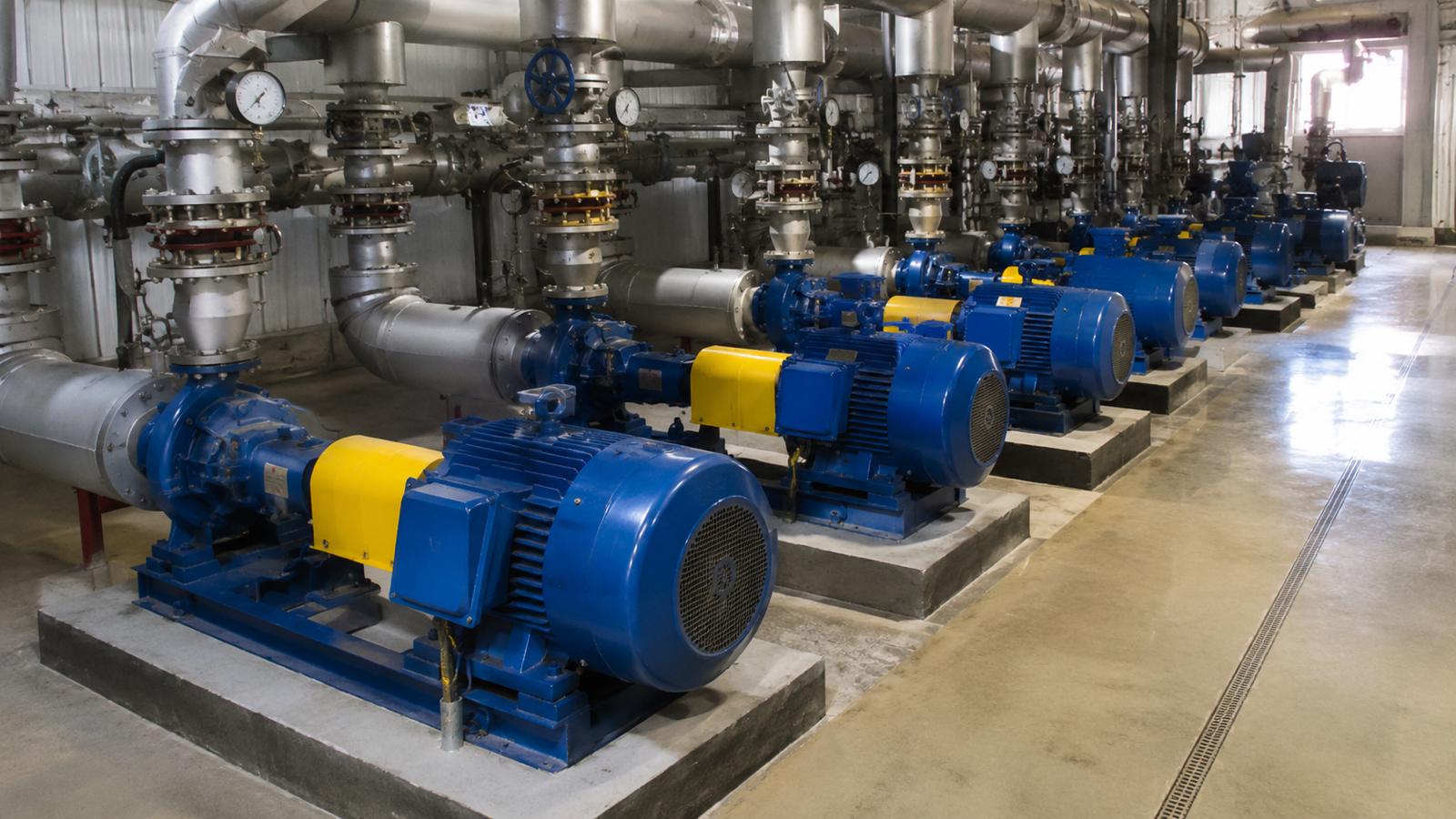
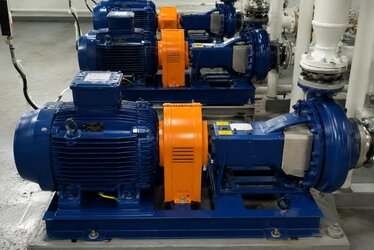
Replacing the electric motor coupled to the pump in a booster set

Whole Set or Motor Only? The Decision Criterion

To decide, first clarify the extent of the damage. If the motor winding has burned but the pump volute, impellers, mechanical seal and check valves are sound, replacing only the motor is both economical and fast: when the correct motor arrives from stock, the set is back under pressure the same day. By contrast, if there is wear on the pump impellers, a cavitation mark on the body or a persistent leak at the seal, renewing the motor and then going into a hydraulic overhaul two months later costs more in total; in that case the set should be handled as a whole. In field practice the large majority of cases fall into the first group, because booster motors tire out before the pump due to frequent stop-start. In sets where the expansion tank has shrunk or its membrane has burst, the motor starts dozens of times an hour; the high current drawn at each start heats the winding, the heat spoils the bearing grease, and the motor reaches the end of its life years before the hydraulic section. Having the tank's pre-charge pressure and membrane checked during the motor swap secures the new motor's life from the outset.

A table by building type: where is the fault, how urgent?

The degree of urgency also determines the right supply plan. In apartment blocks and housing estates there is a single booster with no backup; a motor fault means water cuts off directly, and speed of supply comes before everything. In hotels and hospitals the sets are usually multi-pump; the remaining pumps carry the load partly but the comfort pressure drops and the remaining motors are strained, so the swap must be done within a few days. In factories the process-water boosters are tied to the production line; since downtime cost is calculated by the hour, the right strategy in these plants is to keep a spare of the critical motors on the shelf. Whichever group you are in, if the nameplate information is ready in advance, the supply time reaches its shortest form.

The Failed Motor's Nameplate: A Booster-Specific Reading Order

The booster motor's nameplate carries the entire identity of the replacement motor. The reading order should be: first the power (kW) and speed. Booster pumps almost always run with 3000 rpm class — that is, 2-pole — motors; so it is normal to see a value in the 2870–2930 rpm range on the plate. Then the frame size: a code such as 80, 90S or 100L determines the shaft height and the standard shaft diameter. Next the mounting type: motors flange-coupled to the pump carry the marking IM B5, IM B14, or IM V1 indicating vertical operation. Finally the voltage line: in small boosters, 230 V single-phase motors are also common; skipping the single-phase / three-phase distinction on the plate is at the top of the list of mistakes that bring a motor not matching the panel. A clear photo of these four lines is enough to identify the correct motor from stock within minutes.

A special case in monoblock pumps: extended shaft and special flange

On some monoblock booster pumps the impeller mounts directly on the motor shaft; the motor shaft is longer than standard or carries a special thread at its end. In this construction, check the shaft end without removing the motor: if the pump impeller mounts on the motor shaft, the replacement motor's shaft length and end machining must be exactly the same. Such cases that cannot be solved with a standard-shaft motor are the most visible advantage of our being a manufacturer: with shaft-machining and special-flange options we can adapt the motor to your existing pump. Adding a photo of the shaft end and the pump connection alongside the nameplate photo lets us catch this special case before dispatch.

Shaft Height and Flange Compatibility: The Seating Test on the Pump

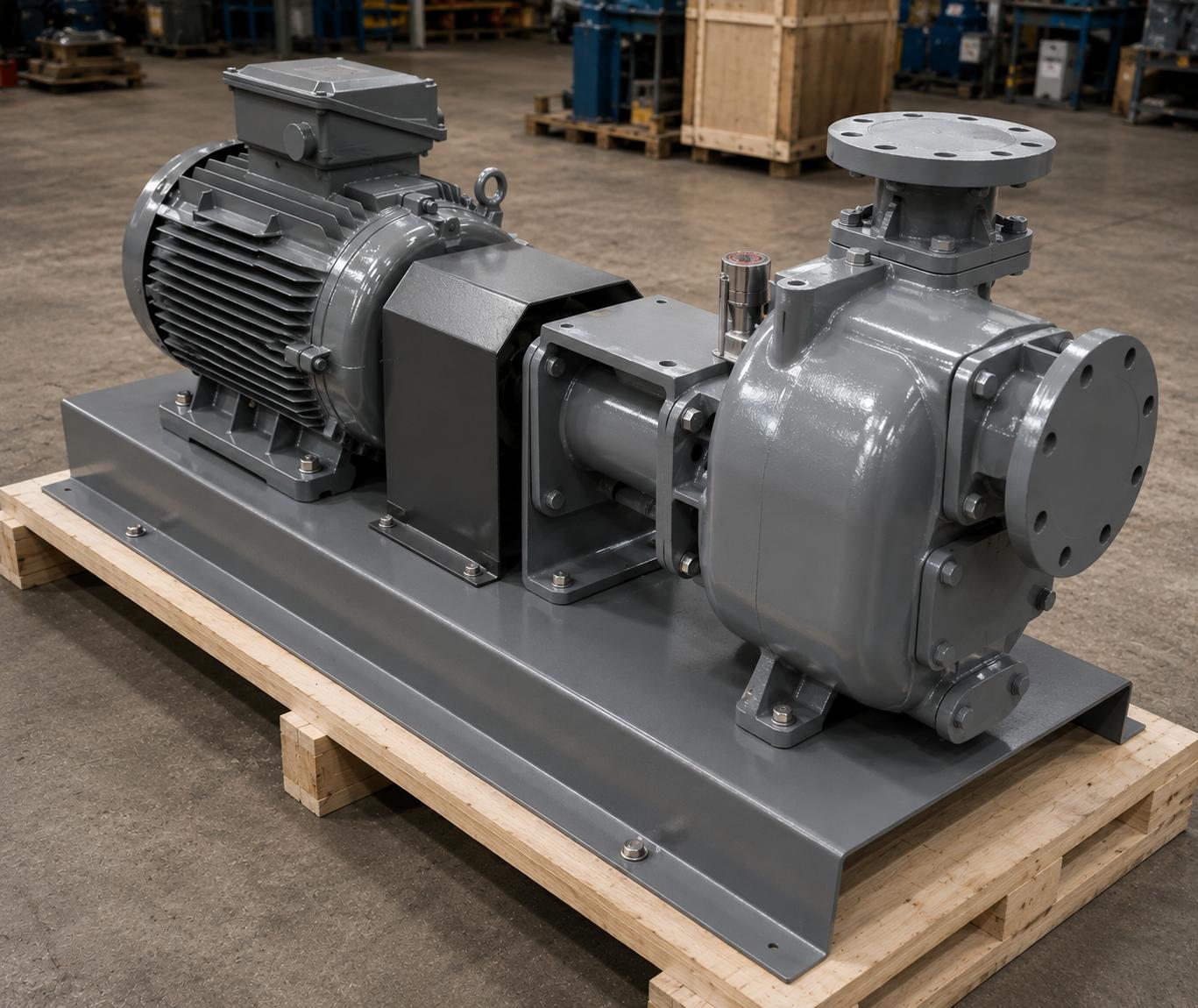
In booster sets coupled through a coupling to a horizontal-shaft, foot-mounted motor, two dimensions are critical. The first is shaft height: the distance from the base of the motor foot to the shaft axis must be the same as the axis height of the pump shaft; otherwise the coupling cannot be aligned, the rubber elements wear quickly, and both motor and pump bearings are damaged in a short time. The frame size already encodes this height: a 90 frame means 90 mm, a 112 frame means 112 mm. The second is the coupling-hub dimension: the bore of the coupling half on the motor side must match the shaft diameter and keyway dimension of the new motor. As long as the frame size stays the same, the shaft diameter stays standard too; so reading the frame code on the plate correctly solves coupling compatibility by itself.

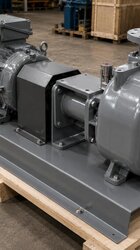
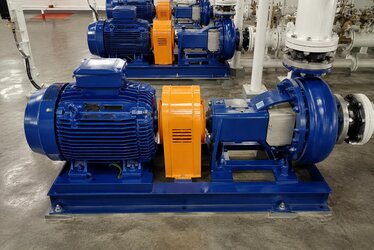
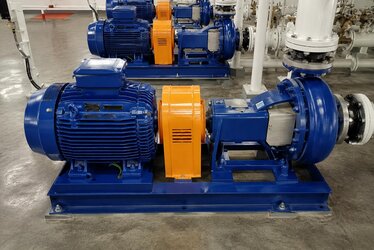
In flange-coupled sets, the motor is bolted to the pump through a lantern piece. Here the B5–B14 distinction is decisive: the B5 flange is large in diameter with plain holes, the B14 flange small in diameter with threaded holes. Measure the spigot diameter on the motor side of the lantern piece and the bolt-hole circle, and compare them with the mounting code on the plate. If the flange type and dimensions are correct, the motor seats on the pump like a key; the spigot recess on the flange provides centring by itself, and no further alignment is needed. For large sets with horizontal pumps and foot-mounted motors, you can review the B3 and B35 frame options in our pump electric motors range.

Vertical Mounting: The Fine Points of the V1 Position

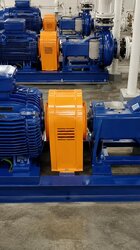
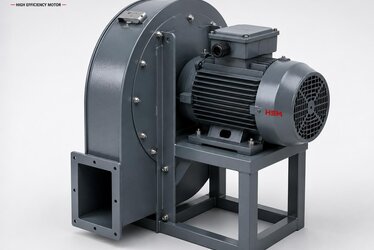
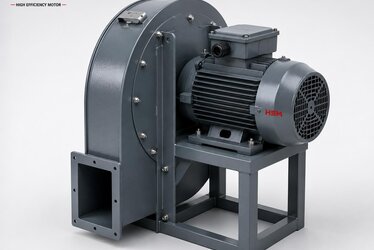
In modern booster sets built with multistage vertical pumps, the motor runs above the pump with the shaft pointing downward; this position is named IM V1. Vertical operation is no ordinary detail for the motor: the weight of the rotor and of the pump stages attached to the shaft loads the motor bearing as an axial load. For this reason a motor that will run in the V1 position must have a bearing arrangement suited to vertical load, with — if necessary — a bearing in the upper seat capable of carrying axial load. Using a motor configured for horizontal operation in a vertical set is a mistake unnoticed in the first weeks but revealed within a few months by bearing noise. Always convey the "motor will run vertically" information when ordering; if the plate carries the V1 marking, the photo says it already. The use of a protective cap (rain hood) on vertical motors against dripping water is another detail to ask about; in rooftop and open-area boosters it prevents water ingress through the fan cover.

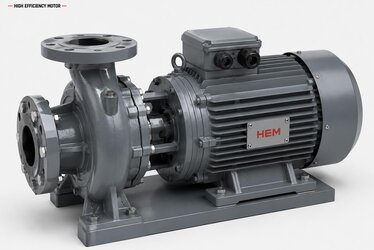
Electric motor in the V1 mounting position on a vertical-shaft booster pump

Pressure Switch and Panel Compatibility: The Electrical Side

Even if the motor seats mechanically in the booster, the job is not done; the set performs automatic stop-start through a pressure switch or pressure sensor, and the electrical side must be compatible with the new motor. The points to check, in order, are these. First, the rated current: the new motor's nameplate current must stay within the setting range of the thermal relay in the panel. If you chose a motor of the same power but a different efficiency class, the current value changes somewhat; the thermal setting should be updated to the new plate. Second, the starting method: small boosters start direct, larger sets have star-delta or a soft starter. A motor to be connected to a panel that starts star-delta must have a 400/690 V winding and six terminals in the terminal box; this line is written clearly on the plate. Third, the capacitor value in single-phase motors: the capacitor capacity on the plate is information that should be renewed together with the new motor. Fourth, constant-pressure systems with a frequency converter: if the motor is fed from a drive, add this to the order note; our sales team will guide you toward a drive-compatible insulation structure and the correct parameter set. Fifth, the sequencing relay in multi-pump sets: in sets that start in turn so the pumps age equally, all motors having the same power and current value preserves the operating balance; when changing a single motor, aim for the same nameplate values as the others.

Swap Day: A Practical Order for Removal and Assembly

When the correct motor reaches you, the swap itself is a few hours' work; even so, steps done out of order in the field create needless repeats. First cut the power to the set and close the suction and discharge valves. In coupled sets, marking the alignment of the coupling halves with a ruler before removing the motor gives you a ready reference for placing the new motor. In flanged and vertical sets, the pump shaft must be supported while the motor bolts are undone; in vertical multistage pumps the adjusting shims of the shaft coupling must not be lost while the motor is lifted, because the vertical position of the pump impellers is set by these shims. After the new motor is seated, the first check in the electrical connection is the direction of rotation: in three-phase motors, swapping two phases turns the pump backwards; a reversed centrifugal pump delivers little and noisily and, over time, creates seal and bearing damage. A short direction test before the coupling is fitted reduces this risk to zero. In the last step the set is bled, the lower-upper values of the pressure switch are checked, and a few stop-start cycles are watched: if the start is smooth, the current runs below the plate value, and the switch cuts and starts at the correct pressures, the swap is complete.

Spare-motor policy: keep a second motor in critical buildings

In hospitals, hotels, high-rise residences and plants using continuous process water, the cost of a water cut is far above the price of a spare motor. We recommend that such operations keep one of the motor type used in the set on the shelf: in a breakdown the swap takes minutes rather than hours, with no waiting on cargo. In multi-pump sets using a single motor type, one spare insures three pumps at once; that divides the backup cost by three.

Choosing the Right Power: Is Fitting a Bigger Motor Than the Old One a Solution?

A frequently heard field suggestion is the "fit one size up, let it run easy" approach. In a booster this suggestion is usually wrong. The power the pump draws from the shaft is determined by impeller diameter and flow; when the motor is enlarged, the pump does not start drawing more power — the motor merely runs inefficiently at low load. Moreover, the larger motor draws a higher starting current; the thermal and contactor values no longer fit, and a panel revision is needed. If there is a suspicion that the old motor "burned because it was inadequate", the cause is almost always elsewhere: the membrane tank is not doing its job and the motor has tired from stop-start frequency, or grid voltage imbalance has heated the winding. The right approach is to keep the power on the plate and remove the cause of the fatigue. Systems that draw from a well and use a submersible motor are outside the scope of this article; for that application you can see our deep-well pump motor selection guide.

Fast Supply From Stock: A Booster Cannot Wait

A booster fault means no water in an apartment block, customer complaints in a hotel, and a process stoppage in a factory. Speed of supply is therefore as important as the product itself. HEM Motor keeps in its warehouses in Turkey the 2-pole motors that booster applications use heavily, across a wide power and frame range; when your nameplate photo arrives, the matching is done the same day and the motor is shipped. On our booster pump electric motors page you can review options suited to flanged and vertical operation. High-efficiency-class models visibly reduce electricity consumption in boosters that start hundreds of times a day and run every day of the year; a motor swap is also the right opportunity to raise the efficiency class. The jockey and main pump motors in fire-pump sets are subject to different rules from a booster; we have reserved a separate article for that topic: 10 questions to ask when buying a fire pump motor.

Frequently Asked Questions

My pump is part of a foreign-made booster set; can a locally made motor be fitted to it?

In most cases, yes. The large majority of booster pumps are made with IEC-standard frame and flange dimensions; as long as the frame size and mounting code on the plate match, the origin of the motor is irrelevant and the motor seats on the pump directly. The exception to watch for is monoblock constructions where the impeller mounts on the motor shaft and manufacturer-specific lantern dimensions. In these cases, send a photo of the shaft end and the lantern connection together with the nameplate; if a standard motor cannot solve it, we can adapt it with the shaft-machining option.

My motor keeps tripping the thermal; should I choose a bigger motor in the swap?

First find the cause, then choose the motor. Thermal tripping usually comes not from the motor being small but from increased stop-start frequency due to a membrane-tank fault, from voltage imbalance, from scale and debris building up on the pump impeller raising the load, or from an incorrect thermal setting. A large motor fitted without removing the cause masks the problem but runs inefficiently and requires a panel revision. Keeping the plate power and removing the fault source is the right choice for both the initial investment and the operating cost.

My booster set has three pumps and only one is faulty; can I replace the single motor with a different efficiency class?

It is technically possible; since the sequencing relay runs the motors in rotation, the set keeps functioning. However, as the new motor's current value will differ somewhat from the old one, the thermal setting of that pump must be done separately. From an operating standpoint, the ideal is to equalize all three motors to the same efficiency class when the opportunity arises: it means the same nameplate values, a single spare type, a single thermal setting and balanced ageing. If you ask, we prepare a bulk quote for a three-motor renewal.

Get a Quote

Send the nameplate photo of your booster's failed motor and a view of the pump connection; we will quote the motor that fits your existing pump exactly, together with stock status and lead time, the same day. You can reach our sales team at +90 (532) 345 49 86 or convey your request in writing through our contact us page. Let your water not cut off, and let your set return to pressure the same day.