English
 Türkçe


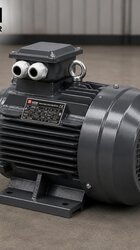
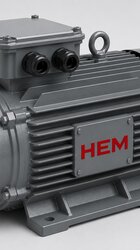
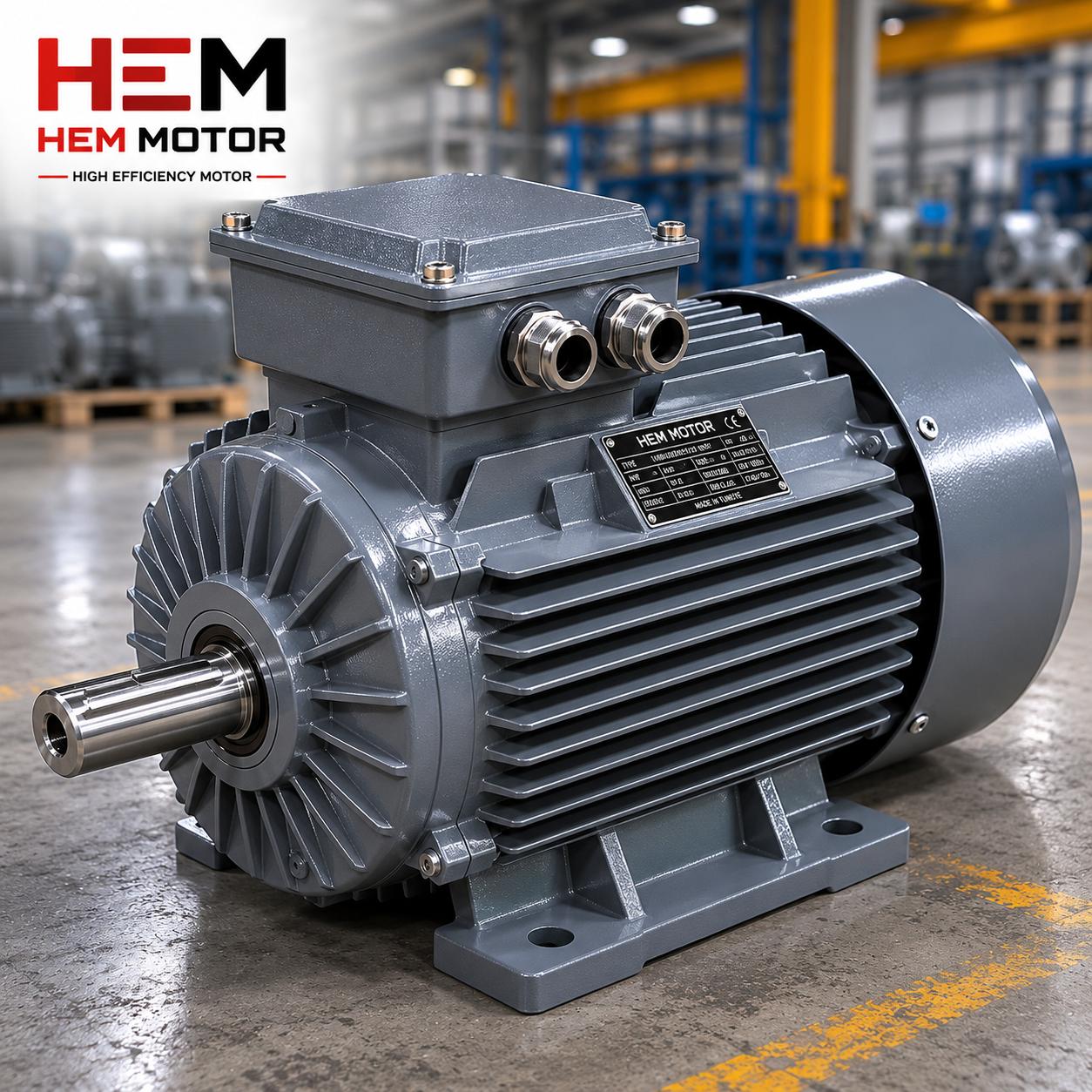

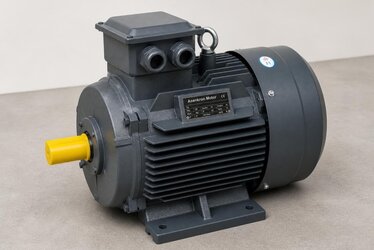
When you consider replacing a motor in your plant with a more efficient IE4 motor, the first question that comes to mind is usually this: "Will the new motor fit my existing machine, or will a mechanical modification be required?" This concern is justified, but it is largely unnecessary. That is because the physical dimensions of electric motors are determined by the IEC standard, independently of the efficiency class. Thanks to this standard, fundamental mechanical dimensions such as frame size, foot-hole spacing and shaft diameter do not change whether the motor is IE2, IE3 or IE4.
In this article we deliberately address not the energy gain, but only the mechanical compatibility. In other words, we examine how the frame size, the foot holes, the shaft diameter and the cable entry match the existing motor. As a manufacturer and seller, our aim is to answer in advance the mechanical questions you may face in the field during a retrofit — that is, the replacement of the existing motor with a new one — and to enable you to fit the transition into a planned maintenance window.
In the supply experience we at HEM Motor have maintained since 1979, what we have seen is this: for businesses that act on correct information, the switch to IE4 most often requires no change to the machine at all. Below we explain the technical reasons for this and the few exceptions to keep in mind.
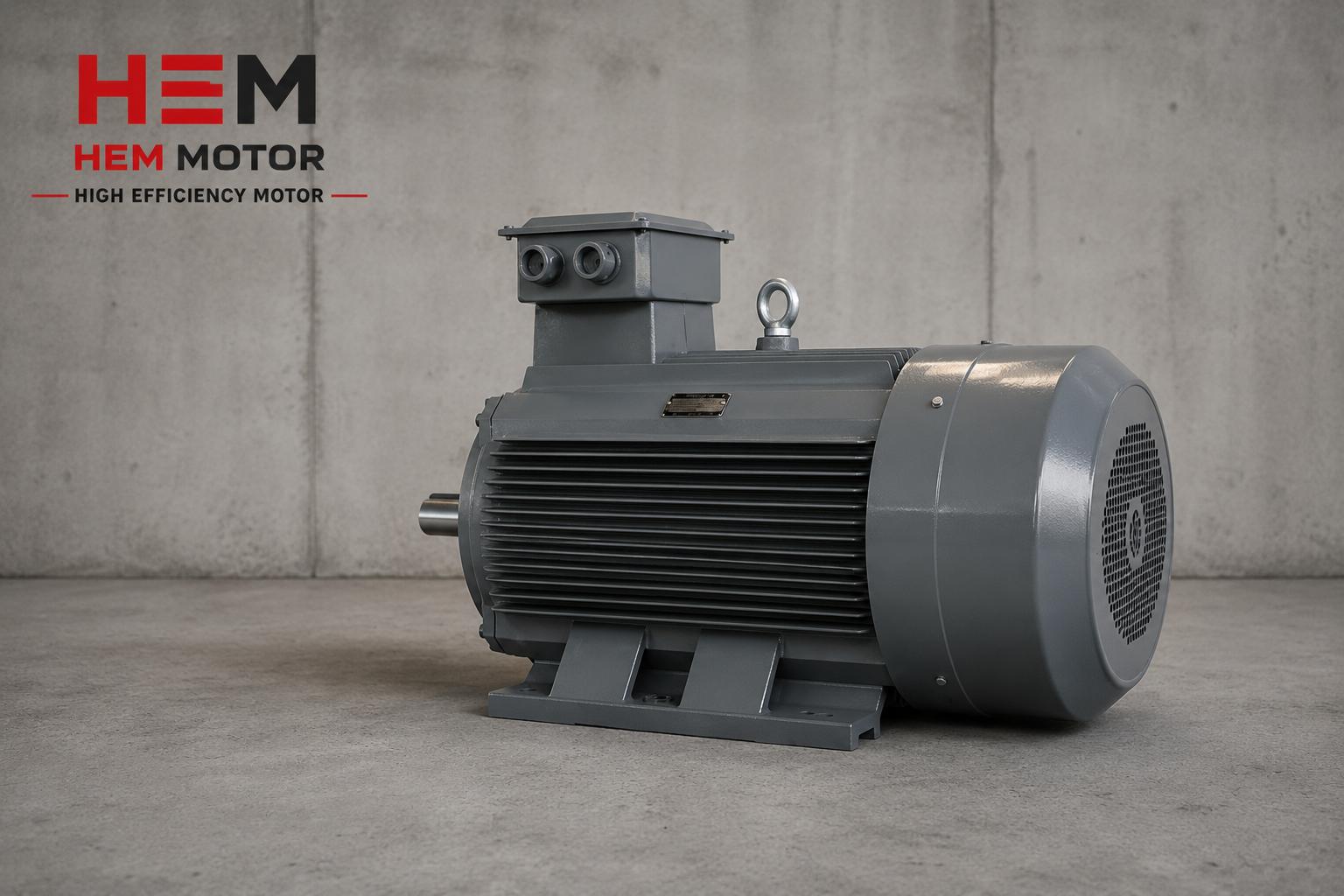
The IEC Standard Keeps Dimensions Independent of Efficiency
The mechanical sizing of electric motors is based on the international IEC 60072 standard. This standard defines the foot-hole positions, shaft diameter, shaft length and mounting dimensions for each frame size. For example, a 132M frame size has the same foot-hole spacing and the same shaft centre height, regardless of the manufacturer and the efficiency class.
The practical meaning of this standardization is very powerful: when you replace an IE3 motor with an IE4 motor of the same frame size, the motor sits exactly on the floor, the coupling and the belt-and-pulley system. The efficiency class concerns the winding and magnetic design inside the motor; this does not change the mounting dimensions on the outside.
It helps to think of the efficiency class and the frame size as two independent properties. The frame size is a mechanical promise — a contract about where the bolt holes are and how high the shaft sits — that every conforming manufacturer must honour. The efficiency class, on the other hand, describes how cleverly the magnetic circuit and the windings convert electrical energy into mechanical work inside that fixed envelope. Raising the efficiency from IE3 to IE4 changes the internals, not the interface, which is precisely why a retrofit so rarely disturbs the surrounding machine.
The Fundamental Dimensions the Standard Keeps Fixed
- Shaft centre height: The distance from the shaft axis to the base of the foot (for example 132 mm).
- Foot-hole spacing: The longitudinal and transverse hole distances, the bolt pattern.
- Shaft diameter and length: The end dimensions on which the coupling or pulley seats.
- Keyway dimensions: The key width and depth on the shaft.
- Flange dimensions: The hole pattern and spigot diameter in flange-mounted designs.
Because the correct matching of the shaft connection is critical, if you want to clarify the coupling and pulley compatibility, our guide to motor shaft diameter, key and coupling dimensions provides a detailed reference.
Mechanical Compatibility: What Should Be Checked in Practice?
Although the standard guarantees many things, it is good engineering practice to always verify a few points in the field. When switching to IE4, it makes sense to examine mechanical compatibility under four headings: frame size, foot hole, shaft diameter and cable entry.
Frame Size
Read the frame size of your existing motor (for example 90L, 112M, 160L) from its nameplate. An IE4 motor of the same frame size is equivalent in terms of mounting. The only point to watch is that in some cases an IE4 motor may have a slightly longer body than an IE2 motor of the same power; this can affect the total length of the motor by a few centimetres. The floor anchor-hole positions do not change, but it is useful to confirm that there is sufficient clearance behind the motor.
Foot Hole
The position of the foot holes and the bolt diameter are fixed by the standard. When the same frame size is chosen, you can bolt the new motor in without changing the existing anchor holes at all. This is the most trouble-free aspect of the retrofit.
Shaft Diameter and Key
The shaft diameter and key dimensions are also standard values bound to the frame size. For this reason, your existing coupling or pulley generally fits the new motor's shaft exactly. Nevertheless, if there is shaft wear on an old motor or a special coupling application, the shaft-end dimensions should be verified by measurement.
Cable Entry and Terminal Box
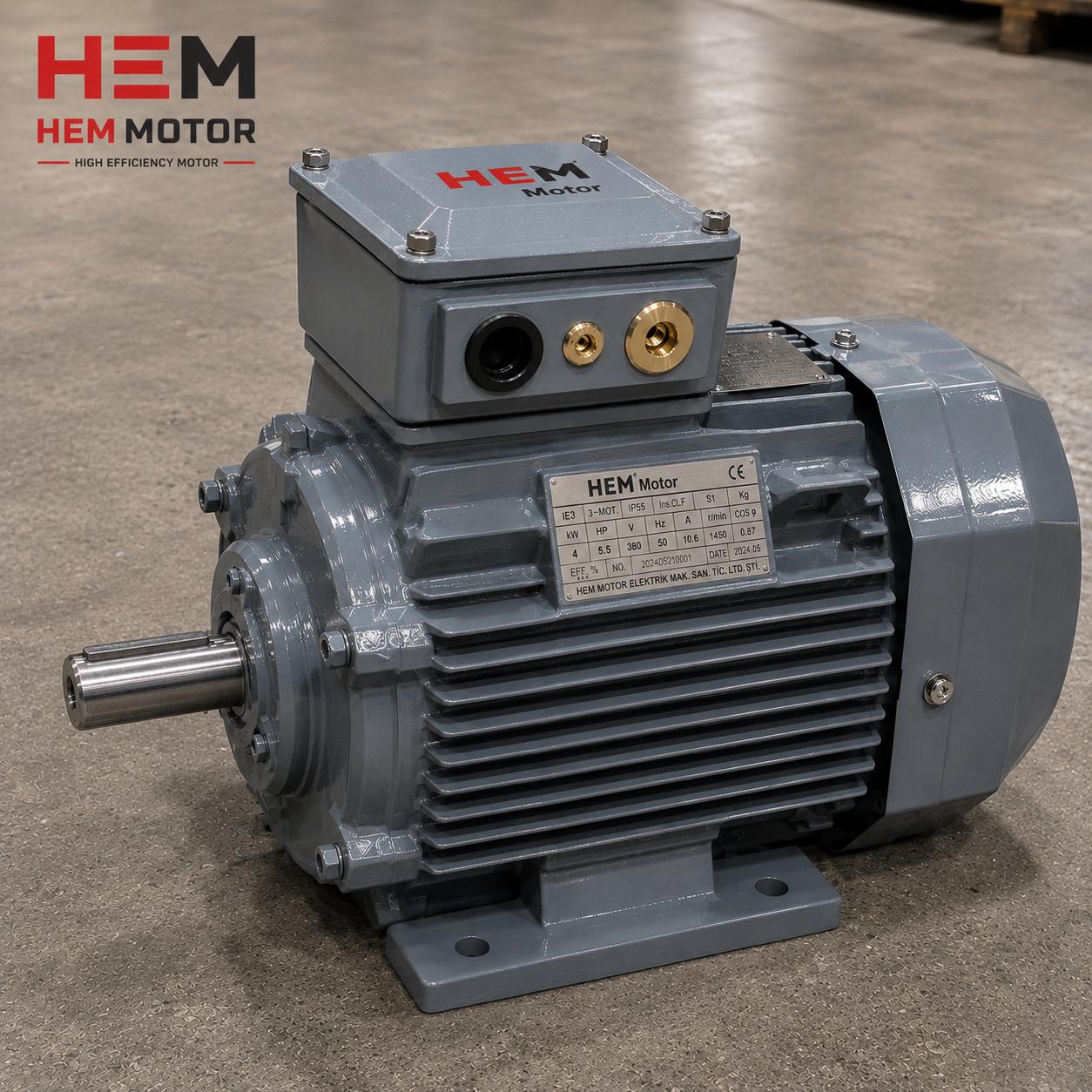
The position of the terminal box and the cable-gland entry is the last mechanical element to watch during mounting. On most standard motors the terminal box is located on top and the entry direction can be rotated according to the field requirement. Checking that the entry direction of the new motor is compatible with your existing cable route speeds up commissioning. For terminal connection details, you can take a look at our terminal and cable connection guide.
Exceptions to Keep in Mind
When we say "it fits exactly in most retrofits," we mean that the transition is almost always trouble-free; however, there is a small minority of cases that require planning. Knowing these exceptions in advance ensures that you do not encounter surprises.
- Total motor length: Some IE4 models may be slightly longer because the amount of magnetic material increases; in tight cabinets this should be measured beforehand.
- Weight difference: The use of more copper and lamination steel may make the motor somewhat heavier; the handling and lifting plan should be made accordingly.
- Cooling fan size: A fan design optimized for efficiency may affect the rear clearance of the motor.
- Special shaft ends: On old motors with non-standard, custom-made shaft ends, the shaft dimension should be separately verified.
These exceptions are rarely encountered, and most are resolved with a simple preliminary measurement. If you are curious about the details of a cooling design optimized for efficiency, our article on IE4 motor cooling and fan design explains the subject in depth.
A useful habit before any retrofit is to spend ten minutes with a tape measure and the existing motor: record the frame size and total length, the clearance behind the fan cover, the cable-entry direction and the weight you will have to lift. None of these require special tools, and together they turn the few genuine exceptions above into known quantities rather than surprises discovered halfway through a shutdown. When the measurements are in hand, the equivalent motor can be confirmed on paper long before the maintenance window opens.
Transition Within a Planned Maintenance Window
When you act on correct information, the switch to IE4 can be carried out within a planned maintenance window without stopping production for long. Removing the old motor, seating the new one in place without touching the anchor holes, fitting the coupling and making the electrical connection is, in most plants, a job of a few hours. Because the mechanical compatibility is guaranteed by the standard, this duration remains predictable.
As a manufacturer and seller, we at HEM Motor quickly supply an exactly equivalent IE4 motor based on the nameplate information of your existing motor. A motor that arrives with the right frame size, the right mounting type and the right shaft dimension is commissioned in the field without requiring any modification. To plan your transition process and identify the correct equivalent product, you can contact us through our electric motors homepage.
Frequently Asked Questions
Does an IE4 motor fit exactly in place of my existing IE2 or IE3 motor?
Yes, in most cases it fits exactly. The IEC 60072 standard keeps mechanical dimensions such as frame size, foot-hole spacing and shaft diameter fixed independently of the efficiency class. When you choose the same frame size, the motor settles onto the floor, the coupling and the pulley without requiring any change. Only the total motor length may be slightly different on some models.
Do I need to re-drill the floor anchor holes during the transition?
No. Because the foot-hole positions are determined by the standard, an IE4 motor of the same frame size is bolted to the existing anchor holes. No modification such as drilling or welding is needed. This is the easiest and most reliable aspect of the retrofit.
How long does the transition stop production?
Because the mechanical compatibility is guaranteed by the standard, the operation is predictable and fast. Removing the old motor, fitting the new one, connecting the coupling and completing the electrical connection fits, in most plants, into a maintenance window of a few hours. When the correct equivalent motor is supplied in advance, there is no unplanned downtime.