English
 Türkçe


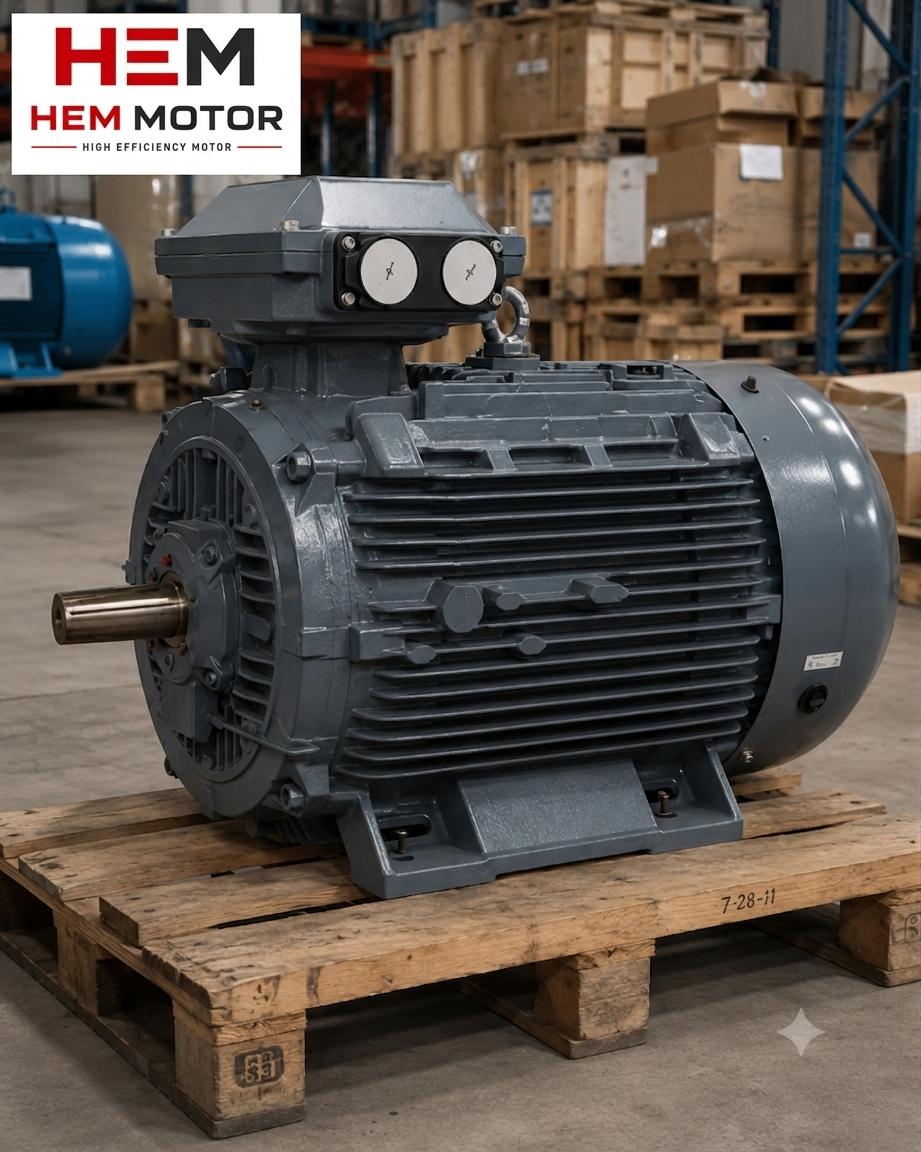

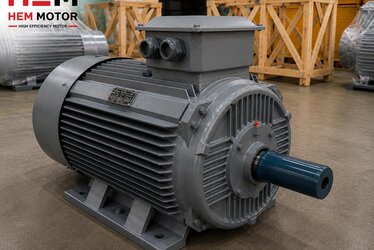
One of the most common problems when buying a motor is, interestingly, that its power and speed are stated correctly while the frame size is never discussed. The result is usually the same: the motor arrives at the facility but does not seat into the machine; the foot holes do not line up, the shaft height does not match, or the flange diameter turns out different. Yet in cast iron motors, frame size is a parameter at least as binding as power and speed. This guide gathers, from a buyer's viewpoint, what the IEC frame number means, the frame-power relationship, and what is needed to pick the right motor from stock first time.
Knowing the power and speed correctly is only two-thirds of buying the right motor. The third, often skipped, dimension is the motor's physical dimensions and mounting interface. No matter how correct a motor's power and speed are, if it does not seat into the machine's mount, it is useless. Cast iron frame is preferred because it offers durability and vibration damping in heavy industrial conditions; but these frames must be selected according to standard IEC dimensions.
What Is the IEC Frame Number? The Shaft Height Logic
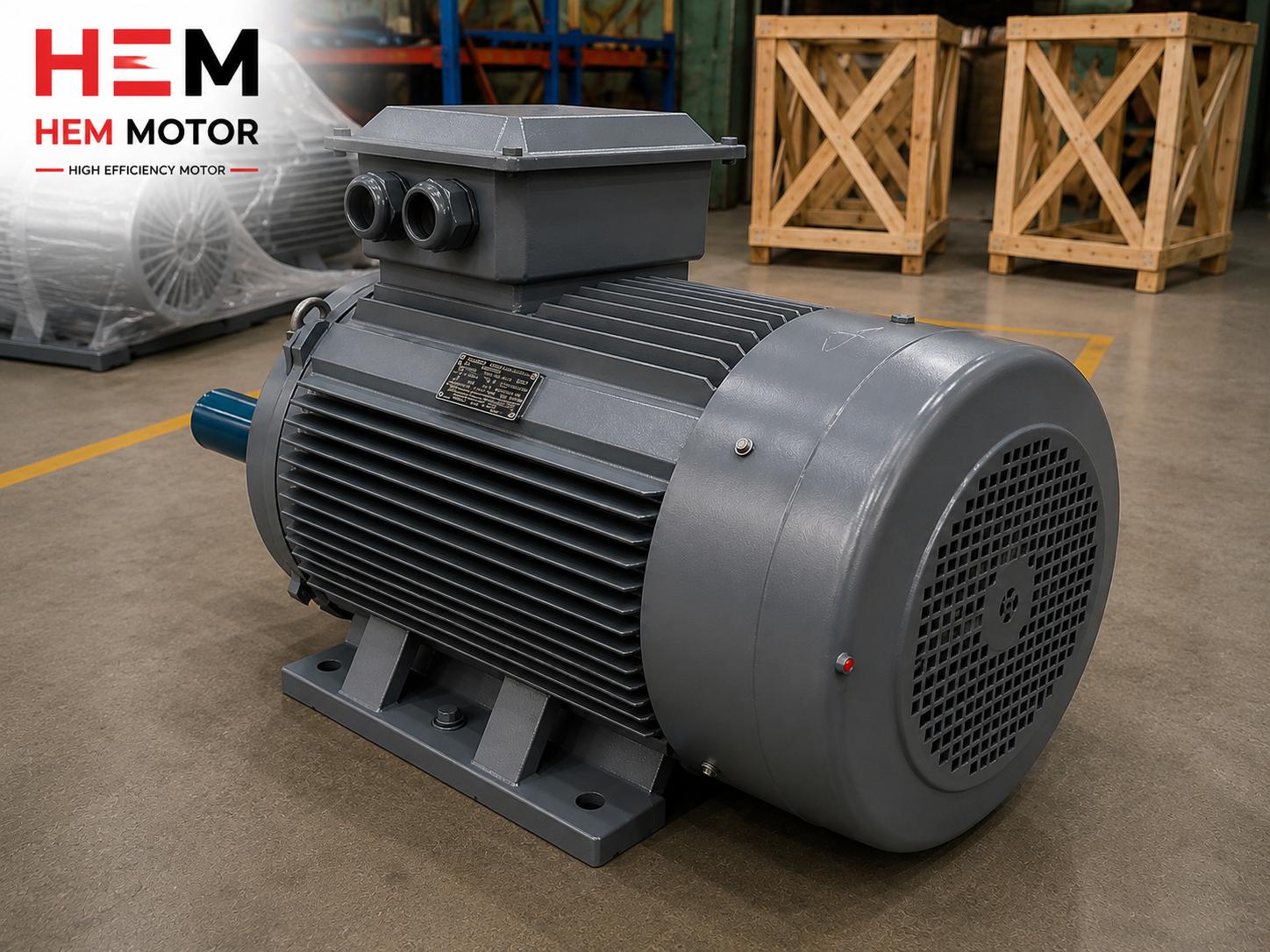
Per the IEC standard, the motor frame number expresses, in millimetres, the height from the foot surface to the shaft axis. For example, frame number "112" means 112 mm from the foot base to the shaft centre. This shaft height is the basic dimension that determines on which plane the motor will sit in the machine.
The S, M, L letters next to the frame number show the package (body) length of a motor at the same shaft height:
- S (Short): The shortest body package at the same shaft height.
- M (Medium): A medium-length body package.
- L (Long): The longest body package at the same shaft height.
So "132S" and "132M" have the same shaft height (132 mm) but a different package length and usually a different power. Grasping this logic is the key to solving the frame-power match. To choose the right motor family holistically, you can also look at the electric motor types and buying map guide.
The Frame-Power Relationship
IEC maps certain power-speed combinations to certain frame numbers. The general rule is: as power rises, the frame number grows, but different powers can also exist at the same frame number; here speed and the S/M/L package come into play. The key relationships are:
- Power ↑ → frame number ↑: Higher kW usually requires a larger shaft height.
- Same frame, different speed, different power: 2/4/6-pole versions at the same frame number give different power.
- S/M/L package shifts power: At the same shaft height, an L package can hold higher power than an S.
So the answer to "how many kW do I want" does not, on its own, determine the frame; it must be thought through together with speed and mounting type. To see the most sought-after power-speed-frame combinations, the IE3 electric motor stock guide is a practical resource.
Mounting Type: The Inseparable Part of Frame Size
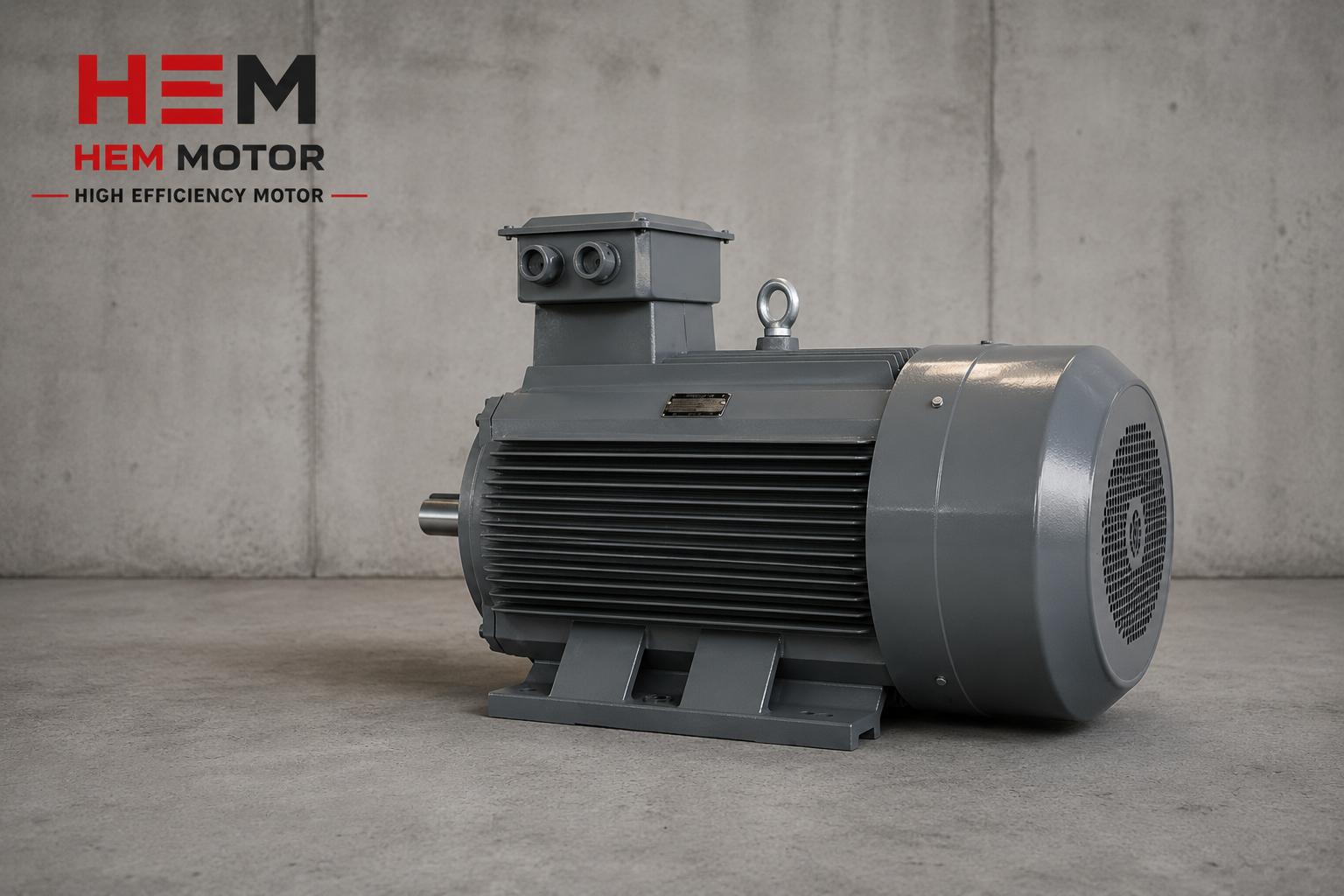
As important as the frame number is how the motor connects to the machine. The standard IEC mounting types are:
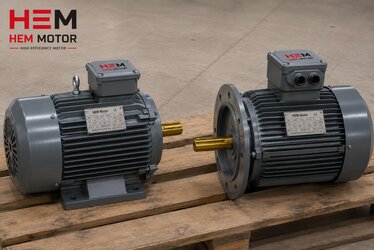
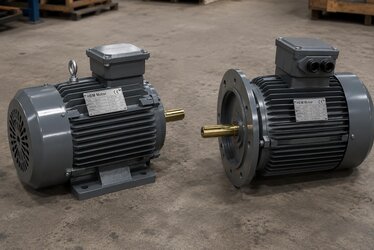
- B3 (Foot-mounted): The motor is bolted by its feet to the floor or a slide rail; the most common type.
- B5 (Flange-mounted): The motor connects directly to the machine or reducer by its front flange; there are no feet.
- B35 (Foot-and-flange): Both feet and flange; offers dual-connection flexibility.
Even at the same power, speed and frame number, if the mounting type differs, the motor will not fit the machine. Especially in motors connected to a reducer, the flange type and flange diameter are critical. To complete the right speed-pole selection in asynchronous motors, the asynchronous motor pole selection: 2, 4, 6 poles guide should be read together with frame selection.
Picking the Right Motor From Stock First Time
For a motor to seat in place when you bring it to the facility, clarify all three dimensions before ordering: power, speed and frame+mounting. The practical checklist:
- Shaft height: Frame number (e.g. 90, 112, 132, 160) and S/M/L package.
- Mounting type: B3 / B5 / B35 and flange diameter.
- Shaft diameter and length: For coupling or pulley compatibility.
- Foot hole spacing: Fit to the existing mounting holes.
- Terminal box orientation: The cable entry on the suitable side.
If you are replacing an existing motor, photographing its nameplate and mounting interface is the fastest method. The nameplate gives power, speed, efficiency class and often the frame number; the photo makes it easy to verify the mounting type and shaft dimension. When these three dimensions are complete, the motor seats first time and unnecessary back-and-forth is avoided.
Quick Pre-Order Verification
- Are the frame number and package letter (S/M/L) correct?
- Does the mounting type (B3/B5/B35) fit the machine?
- Does the shaft diameter suit the coupling/pulley?
- Are power and speed consistent with the frame?
The Advantage of the Cast Iron Frame
A cast iron frame offers higher mechanical strength and better vibration damping in heavy industrial conditions than an aluminium frame. That is why it is preferred in conveyor, crusher, screen and heavy-duty drives. But to benefit from this advantage, the motor must be selected with the right frame size and mounting type; otherwise even a durable frame is useless if it does not seat in the machine. To pick the cast iron motor with the right frame size and power from our wide stock, you can visit our homepage.
Common IEC Frame Numbers and Typical Power Ranges
Knowing the most frequently encountered IEC frame numbers in industry and which power ranges they correspond to greatly speeds up a stock query. The list below increases by shaft height; the power each frame number covers varies with speed (pole count) and the S/M/L package:
- 71-80-90 frames: Small power class; light drives, small pumps and fans.
- 100-112-132 frames: Medium power class; the most common band in industry, general-purpose drives.
- 160-180-200 frames: Upper-medium power; larger pumps, fans, conveyors and agitators.
- 225-250-280 and above: High power; heavy industrial drives and large machines.
At the same frame number, the 2, 4 and 6-pole versions give different power; so the frame number must be thought through together with speed, not alone. To clarify the right speed-pole selection, the asynchronous motor pole selection: 2, 4, 6 poles guide completes frame selection.
Typical Field Problems Related to Frame Size
Not discussing frame size before ordering leads, beyond the motor arriving and not seating, to many practical problems. The most frequent are:
- Foot holes do not line up: A motor of a different frame number does not fit the existing mounting holes; it requires drilling new holes or an adapter plate.
- Different shaft height: The coupling or pulley alignment is thrown off; misalignment creates vibration and early bearing failure.
- Flange diameter does not fit: In B5 flange-mounted motors, if the flange diameter does not fit the reducer, the motor cannot be connected.
- Different shaft diameter: The existing coupling or pulley does not fit onto the motor's shaft.
All of these problems are prevented by verifying the shaft height, mounting type and shaft dimensions together before ordering. Photographing the existing motor and reading its nameplate is the most practical way to do this verification within minutes.
Cast Iron vs Aluminium Frame: Which Where?
The choice of frame material is also part of the right motor decision. Knowing the difference between a cast iron frame and an aluminium frame makes it easier to choose the motor suited to the application:
- Cast iron: Heavier, more durable, with better vibration damping; preferred for heavy industry, crusher, screen, conveyor and shock-load drives.
- Aluminium: Lighter and usually in lower power classes; easy to handle, suitable for light drives.
In heavy and vibrating conditions, the cast iron frame directly affects the motor's life and reliability. But to benefit from this advantage, the motor must be selected with the right frame size and mounting type; however durable the material, a motor that does not seat in the machine is useless. To choose the motor with the right frame size, power and material holistically, the IE3 electric motor stock guide is also a helpful resource.
Step-by-Step Verification When Replacing an Existing Motor
When replacing a failed motor with the same one, matching power and speed alone is not enough; the frame size and mounting interface must also be exactly compatible. To bring the right replacement motor first time, follow these steps:
- Read the nameplate: Power (kW), speed (rpm), voltage, efficiency class and often the frame number are written on the nameplate.
- Confirm the frame number: If it is not on the nameplate, determine the IEC frame number by measuring the shaft height.
- Identify the mounting type: Verify by photo whether it is foot-mounted (B3), flange-mounted (B5) or foot-and-flange (B35).
- Measure the shaft diameter: The shaft diameter and length are critical for the coupling or pulley to fit onto the motor.
- Check the foot hole spacing: Make sure the new motor fits the existing mounting holes.
When these five steps are complete, the arriving motor seats fully into the machine first time and unnecessary back-and-forth is avoided. Often, photographing the existing motor and its nameplate is the most practical way to do all this verification within minutes.
The Relationship Between Frame Size and Cooling-Protection Class
Frame size selection affects not only mechanical compatibility but also the motor's cooling and protection performance. A larger frame means a wider cooling surface and usually better heat dissipation. In a motor running under heavy and continuous load, the right frame size ensures heat is safely rejected; a frame chosen too small increases the risk of overheating.
In addition, the protection class (IP) determines the motor's resistance to dust and water and is closely related to the frame design. Choosing the appropriate IP class for dusty crushing-screening plants or humid environments directly affects the motor's life. So when selecting the frame size, not only the shaft height and mounting type but also the protection class required by the operating environment must be taken into account. When the right frame, right protection and right power come together, the motor both seats in place and runs with a long life.
FAQ
What does the IEC frame number mean?
Per IEC, the frame number expresses, in millimetres, the height from the motor's foot surface to the shaft axis. For example, frame number "132" means a 132 mm shaft height. The S, M, L letters next to the number show the body (package) length of a motor at the same shaft height: S is the shortest, L the longest package.
Is stating power and speed correctly enough to buy the motor?
No. Even with the right power and speed, if the frame size and mounting type do not fit the machine, the motor will not seat. Before ordering, all three dimensions must be clarified: power, speed and frame+mounting (shaft height, B3/B5/B35 type, shaft diameter, foot hole spacing). When these three are complete, the motor seats first time.
Why is a cast iron frame preferred?
A cast iron frame provides higher mechanical strength and better vibration damping than aluminium in heavy industrial conditions; that is why it is preferred in conveyor, crusher, screen and heavy-duty drives. But to benefit from this advantage, the motor must be selected with the right frame size and mounting type; otherwise even a durable frame is useless when it does not seat in the machine.